Espresso lungo – what is this coffee and how to make it at home?
Espresso lungo is a coffee that regularly comes up in conversations among baristas and coffee lovers, yet… just as often it is confused with an Americano or simply described as a “large espresso”. It is one of those drinks that seems simple at first glance, but in practice raises plenty of questions – especially when it comes to flavour, proportions and brewing method. If you have ever wondered whether lungo is just a more diluted espresso or something more than that, this article will clear up all your doubts.
What exactly is espresso lungo coffee, where does it come from and why can its flavour surprise even those who know classic espresso well? If you are asking yourself: what is espresso lungo?, what kind of coffee is espresso lungo? or how to make espresso lungo?, you are in the right place!
In this article, we will explain step by step what is lungo coffee, how it differs from other espresso-based drinks, what it tastes like and how to prepare it properly – without excessive bitterness or flat aromas. And if you are just starting to build your coffee setup, be sure to visit the Coffee category in our shop, where you will find beans perfectly suited for brewing lungo coffee.
Summary:
- Lungo coffee – what kind of coffee is it?
- Espresso lungo coffee – how does it differ from other coffees?
- Espresso lungo – how to make it step by step?
- Lungo coffee – flavour, aroma and caffeine content
Lungo coffee – what kind of coffee is it?
Lungo coffee (original Italian name: caffè lungo) is a coffee drink prepared using an espresso machine, but with a larger amount of water passing through the ground coffee during extraction.
So how can we answer the question what is espresso lungo? in the simplest way? It is an “extended” espresso – both in terms of beverage volume and brewing time. A standard espresso has a volume of around 25-30 ml, while espresso lungo coffee usually reaches 60-90 ml, using the same dose of coffee in the portafilter.
📌 Lungo – what kind of coffee is it? In short:
- ☕ More water flows through the ground coffee.
- ⏱️ Longer extraction time than classic espresso.
- 🌿 A different flavour profile – less intense, but more extended aromatically.
It is precisely this longer extraction that causes questions such as “what is lungo coffee?” to appear so often among coffee lovers. Lungo sits somewhere between the intensity of espresso and a larger drink volume, but – importantly – it is not the same as an Americano.
Where does espresso lungo come from?
Espresso lungo has its roots in Italian coffee tradition, and its name is no coincidence. In Italian, the word lungo simply means “long” and refers directly to the extended extraction time and larger beverage volume compared to classic espresso.
Historically, lungo coffee is a variation of espresso prepared using the same dose of ground coffee (usually around 7-9 g), but with two or sometimes even three times more water, which flows entirely through the coffee under pressure.
- ✔️ Origin: Italy – development alongside the popularisation of espresso machines.
- ✔️ Extraction time: up to 60 seconds (for comparison, espresso extraction lasts around 18-30 seconds).
- ✔️ Beverage volume: approx. 60-90 ml using the same dose of coffee.
Lungo gained popularity in the mid-20th century as a response to the needs of people who wanted a coffee that was milder in perception and larger in volume than classic espresso, while still retaining its character – intense aroma, pronounced flavour and characteristic crema.
💡 Did you know? Although espresso lungo tastes lighter than classic espresso, it often contains more caffeine in reality. The longer contact between water and coffee allows more compounds to be extracted from the beans – including caffeine, which is released later than acids and sugars.
In Italian coffee culture, espresso lungo is most often chosen in the morning or during the day, when someone wants a coffee “to enjoy for longer”, but without reaching for milk-based drinks. Importantly, despite the larger amount of water, lungo is not treated as diluted espresso – it is still a full-fledged coffee brewed in a single extraction process.
It is also worth noting that although the name and idea of lungo come from Italy, similar drinks exist in other coffee cultures – for example in France as café allongé. Regardless of the name, the key principle remains the same: all the water flows through the ground coffee, which clearly distinguishes lungo from an Americano.
Espresso lungo coffee – how does it differ from other coffees?
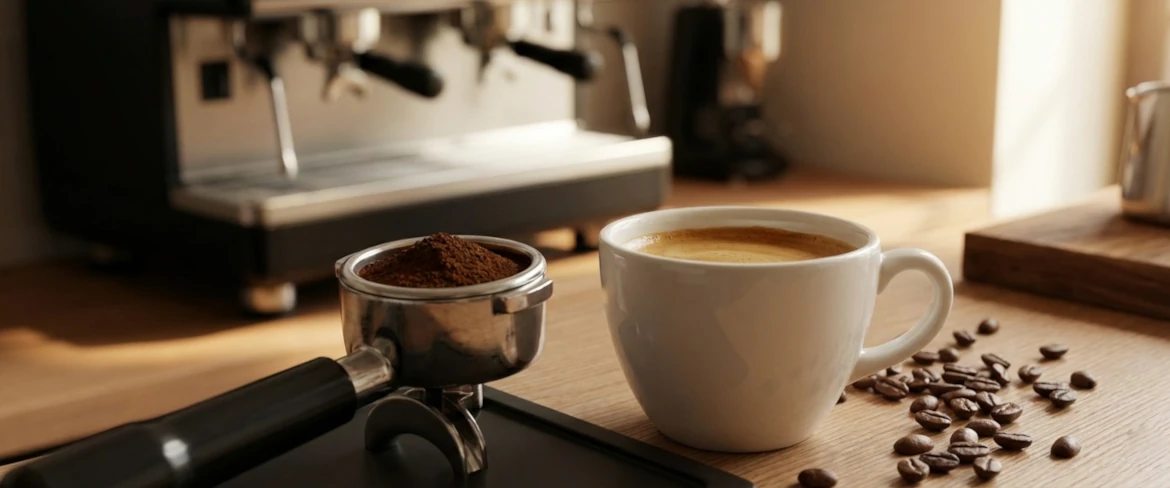
Espresso lungo coffee is often confused with other popular espresso-based drinks, especially when we focus solely on the volume of coffee in the cup. In reality, the differences between lungo, espresso, Americano and ristretto are not determined by the amount of coffee used, but by the amount of water, extraction time and brewing method, which directly affect flavour and intensity.
To better understand what is espresso lungo and where it fits among other classics, let’s take a closer look at these comparisons.
Espresso lungo vs espresso – what are the differences?
Classic espresso and espresso lungo are prepared using the same dose of coffee and an espresso machine. The key difference lies in the brewing time and the amount of water passing through the ground coffee.
Espresso is a short, intense extraction that results in a small volume of coffee with a highly concentrated flavour. Lungo coffee, on the other hand, is brewed for longer, producing a larger drink with a more developed flavour profile. The longer extraction also means a more noticeable bitterness and less “focused” intensity compared to espresso.
Lungo coffee vs Americano
Lungo coffee and Americano are often grouped together in the minds of consumers, mainly due to their similar drink volume. However, they are two completely different beverages.
With lungo, all the water flows through the ground coffee under pressure during a single extraction process. Americano, by contrast, is prepared by adding hot water to a finished espresso shot. As a result, Americano has a milder, more filter-like character, while espresso lungo retains the defining features of pressure-brewed coffee, including a stronger aroma and crema.
Lungo coffee vs ristretto – how do flavour and intensity differ?
Ristretto and lungo coffee can be seen as two opposites on the extraction spectrum. Ristretto is a “shortened” espresso – brewed very quickly with a small amount of water, resulting in a highly concentrated flavour.
Lungo sits at the other end of the scale: the longer brewing time allows more compounds to be extracted from the coffee, including those responsible for bitterness. In practice, ristretto is more intense, compact and often perceived as “stronger”, while lungo offers a longer-lasting, more extended flavour experience.
| Type of coffee | Drink volume | Extraction time | Flavour profile | Brewing method |
|---|---|---|---|---|
| Espresso | 25-30 ml | 18-30 s | Very intense, concentrated | Short pressure extraction |
| Espresso lungo | 60-90 ml | 40-60 s | More bitter, longer-lasting flavour | Extended pressure extraction |
| Americano | 120-180 ml | 18-30 s (espresso extraction) | Milder, similar to black coffee | Hot water added to espresso |
| Ristretto | 15-20 ml | 15-20 s | Highly concentrated, intense | Shortened pressure extraction |
Now that you know what is lungo coffee and how espresso lungo differs from other espresso-based drinks, it’s time to move on to practice and see how to prepare the perfect lungo step by step at home.
Espresso lungo – how to make it step by step?
Although espresso lungo may sound complicated, in practice its preparation is not drastically different from brewing a classic espresso. The key lies in controlling the extraction time, the amount of water and the correct grinder settings. Below you will find a simple guide that will help you prepare lungo coffee at home – without unpleasant bitterness and without losing aroma.
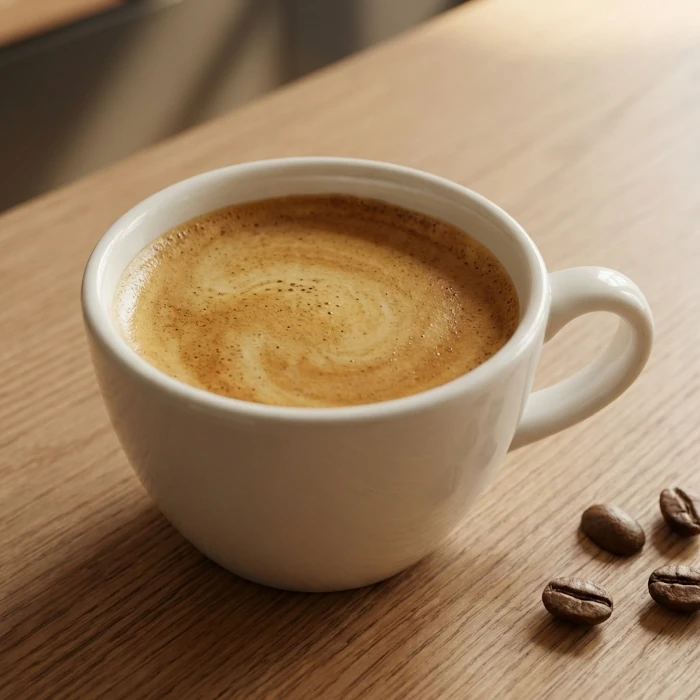
☕ Espresso lungo – how to make it using an espresso machine?
- ✔️ Grind the coffee finely – similar to a classic espresso grind.
- ✔️ Add 7-9 g of freshly ground coffee to the portafilter and tamp it evenly.
- ✔️ Start the extraction and allow the water to flow through the coffee for 40-60 seconds.
- ✔️ Stop the process when you reach approximately 60-90 ml of coffee.
- ✔️ Done! Espresso lungo should have visible crema and a clear aroma.
Tip: If the coffee tastes too bitter, shorten the extraction time or grind the coffee slightly coarser.
Traditional espresso lungo coffee is closely linked to pressure brewing, as its definition is based on forcing a larger amount of water through a compact coffee puck under pressure. However, if you do not have an espresso machine at home, there are methods that allow you to achieve a similar flavour effect.
Alternatives to an espresso machine
- Moka pot: Use a slightly coarser grind and allow more coffee to flow into the upper chamber than you would for a standard brew.
- AeroPress: Use 16-18 g of coffee and add 150-200 ml of water. Press slowly for 45-60 seconds.
- Coffee capsules without a machine: An emergency method – empty the capsule contents into a cup, pour over hot water and strain the brew after about 2 minutes.
Note: Pour-over methods such as the French Press or dripper will produce black coffee, but it will not be lungo coffee – the characteristic crema and oil emulsion will be missing.
If you want to experiment with different brewing methods or match your equipment to your style, visit the Coffee accessories category, where you will find moka pots, grinders and other essential tools.
Lungo coffee – coffee-to-water ratios
One of the most common reasons why espresso lungo turns out too bitter is incorrect proportions. Unlike espresso, where a ratio of around 1:2 is standard, lungo coffee is usually brewed at a ratio of 1:3 or 1:4.
- ✔️ Coffee: 7-9 g
- ✔️ Water: 60-90 ml
- ✔️ Extraction time: 40-60 seconds
If you are aiming for a more balanced flavour, it is worth experimenting not only with the amount of water, but also with grind size. This topic is discussed in more detail in the article: Grinding coffee – why do freshly ground beans change the coffee taste?
The most common mistakes when brewing espresso lungo
The recipe for lungo may seem simple, but in practice it is easy to make small mistakes that can ruin the final result. These are the most common ones:
- ❌ Extraction time that is too long – leads to excessive bitterness and an astringent aftertaste,
- ❌ Grind that is too fine – slows down water flow and over-extracts the coffee,
- ❌ Confusing lungo with Americano – adding water after brewing creates a completely different drink,
- ❌ Poor-quality beans – flavour defects are more noticeable in lungo than in espresso.
If your espresso lungo tastes heavy or flat, treat it as a signal to adjust your settings – sometimes a very small change is enough to bring out a completely new character from the coffee.

Lungo coffee – flavour, aroma and caffeine content
Lungo coffee is an option for those who are looking for a compromise between the intensity of espresso and the possibility of enjoying their coffee for longer. Its distinctive sensory profile and specific extraction method mean that lungo tastes different from classic espresso and affects the body slightly differently. Let’s take a closer look at what you can expect.
What does espresso lungo taste like?
Espresso lungo has a more extended and “open” flavour profile than classic espresso. The longer extraction time means that more flavour compounds are released into the cup, resulting in greater complexity but also a more pronounced bitterness.
Compared to espresso, lungo coffee:
- has lower intensity, but a longer-lasting flavour,
- more often reveals bitter and smoky notes,
- may have milder acidity, especially with darker roasts.
This balance between acidity and bitterness is what makes lungo coffee feel “easier to drink” for people who do not enjoy very short, highly concentrated espresso shots. If you want to better understand how these elements affect coffee flavour, take a look at the article on our blog: Coffee acidity and bitterness – how to choose the perfect beans for your taste
Does lungo coffee contain more caffeine than espresso?
This is one of the most frequently asked questions – and for good reason. Espresso lungo tastes milder than classic espresso, which may suggest that it is less “strong”. In reality, however, the opposite is often true.
The longer extraction time gives water more opportunity to extract caffeine from the coffee. Although the differences are not dramatic, lungo coffee usually contains slightly more caffeine than espresso, especially when comparing standard servings prepared with the same dose of ground coffee.
It is worth remembering, however, that the final caffeine content depends on several factors: extraction time, type of beans, roast level, grinder settings and espresso machine parameters. For this reason, lungo can be a good choice for those who want a more stimulating coffee without the sharp, concentrated intensity of espresso.
Which coffee beans work best for lungo coffee?
Choosing the right beans is particularly important when brewing lungo. The longer extraction highlights not only positive flavour notes, but also any defects in the coffee.
For brewing espresso lungo coffee, the following work best:
- ✔️ 100% Arabica beans or blends with a small addition of Robusta,
- ✔️ medium or medium-dark roasts, which cope better with longer extraction,
- ✔️ flavour profiles with notes of chocolate, nuts, caramel or spices.
If you want to experiment with flavour and find beans perfectly suited to lungo, visit the Coffee category in our shop, where you will find a wide selection of speciality coffees ideal for espresso.
Lungo coffee as a base for milk-based drinks
Although espresso lungo is not a classic choice for milk-based coffees, in some situations it can work well as their base. It is important to remember, however, that the larger amount of water affects the structure of the drink.
Lungo can work particularly well in:
- ✔️ coffees with added chocolate, where bitterness balances sweetness,
- ✔️ drinks such as mocha or mokka,
- ✔️ lighter milk-based drinks with a smaller proportion of milk.
If you would like to see how lungo coffee performs in sweeter compositions, take a look at this recipe: Mocha coffee – what is it and how to make it at home? The perfect homemade coffee with chocolate
Espresso lungo is a coffee that tastes best when you understand its character and consciously choose both the beans and the brewing method. If you enjoy experimenting and are looking for a coffee “to enjoy for longer”, lungo coffee may be exactly what you are looking for.
And you – do you prefer a short espresso or an extended lungo? Try it and find your perfect balance!
FAQ – frequently asked questions about espresso lungo
1. What is the difference between lungo coffee and espresso?
The main difference lies in the amount of water and the extraction time. Espresso is a short, intense drink (around 25–30 ml), while espresso lungo is brewed for longer and has a larger volume (around 60–90 ml). As a result, lungo has a more developed, often more bitter flavour profile and lower intensity than classic espresso.
2. Lungo coffee vs Americano – which one is stronger?
Although Americano and lungo may look similar, espresso lungo is usually stronger in flavour. With lungo, all the water passes through the coffee during extraction, while Americano is made by adding water to a finished espresso, resulting in a milder, more diluted character.
3. Does espresso lungo contain more caffeine than espresso?
In most cases, yes. The longer extraction time allows more caffeine to be extracted than with a short espresso. The differences are not huge, but with standard servings, lungo coffee usually contains more caffeine than espresso.
4. Which beans are best for espresso lungo?
For brewing lungo, medium or medium-dark roasted beans work best, as they cope better with longer extraction. 100% Arabica coffees or blends with a small amount of Robusta, featuring notes of chocolate, nuts and caramel, are a particularly good choice.
5. Is lungo coffee suitable for milk-based drinks?
Lungo is not a classic base for milk-based coffees, but it can work well in lighter drinks or in coffees with added chocolate, such as mocha. It is worth remembering that the larger amount of water can weaken the creamy texture of milk.
6. Can you make lungo coffee without an espresso machine?
Traditional lungo requires pressure extraction, but at home it is possible to achieve a similar flavour effect using a moka pot or an AeroPress. However, it will not be classic espresso lungo with a full crema.
Recommended
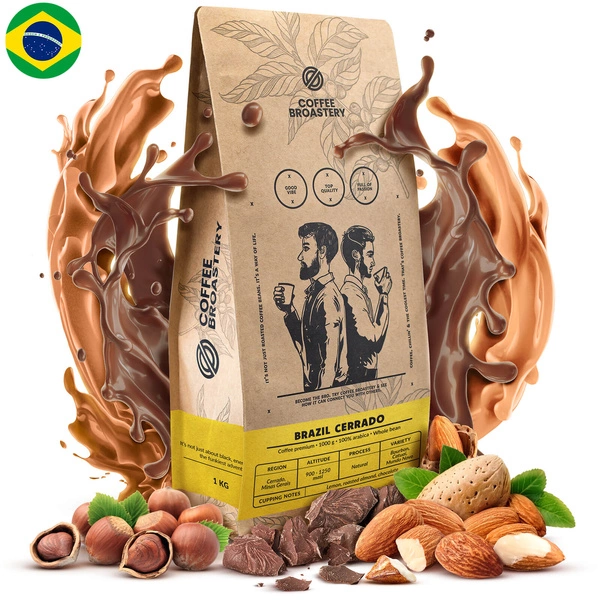
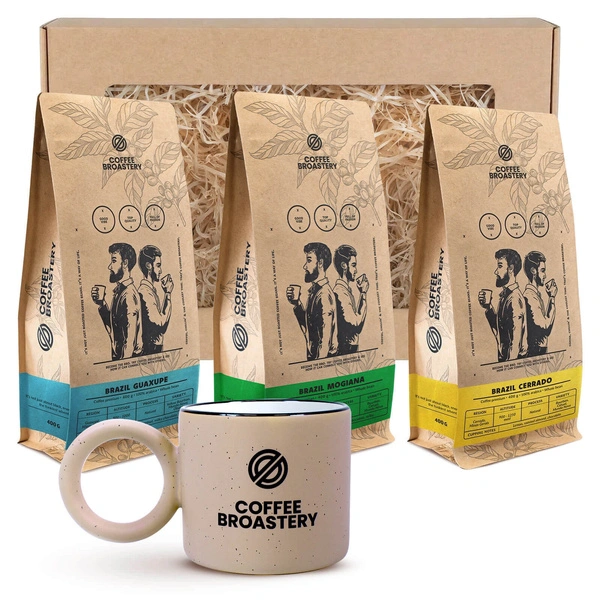
Coffee Broastery - Whole Bean Coffee Brazil Cerrado Premium 1kg

Coffee Broastery - whole bean coffee Brazil Mogiana Premium 1kg

Coffee Broastery Set: Brazil Guaxupe Coffee + Mug