
Ristretto coffee – what is it and how does true Italian essence taste?
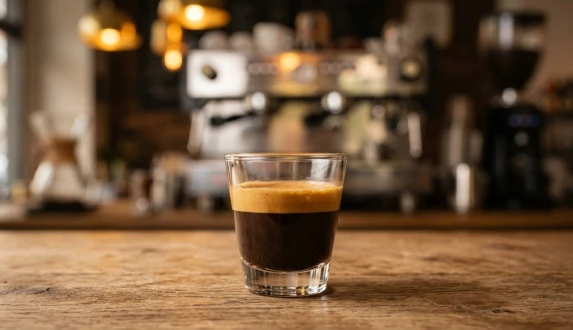
What is ristretto coffee? In the world of speciality coffees and bustling, classic Italian cafés, this drink is almost legendary, shrouded in a hint of mystery. If classic espresso sometimes seems too watered down to you (yes, for some people that's possible!), it's a sign that the time has come to take a step towards absolute coffee essence.
Ristretto coffee is condensed power, syrupy texture, and a true explosion of flavour hidden in just a dozen or so millilitres of brew. However, before we reveal our reliable ristretto recipe, we will take you on a short, aromatic journey. From this post, you will learn how this extraordinary coffee is made, where it comes from, and why it fascinates true coffee lovers all over the world so much. We will also show you that the perfect recipe is well within your reach – right in your own home! Ready for a strong experience? Let's begin!
Summary:
- What is ristretto coffee?
- Ristretto coffee – characteristics and key parameters
- Ristretto recipe. How to prepare ristretto coffee step by step?
- What does ristretto coffee taste like?
- Most common mistakes when preparing ristretto
What is ristretto coffee?
For many people, especially at the beginning of their journey with artisan coffee, entering a good café involves deciphering a rather complicated, Italian-sounding menu. When the question pops into your head: "what is ristretto coffee exactly?" – the simplest and most illustrative answer is: it is a "shorter", more concentrated espresso. The word ristretto in Italian literally means "restricted", "shortened", or "narrower". And this name perfectly reflects the character of this beverage!
In barista practice, this means that to prepare this coffee, we use exactly the same (or very similar) amount of finely ground beans as for a classic espresso, but we stop the extraction – the process of brewing and passing water through the coffee – much earlier. We simply use less water. So, if you are wondering what is ristretto coffee like in terms of volume – imagine the most essential, thickest form of black brew. Instead of the standard 25-30 ml, only 15-20 ml of thick, dark liquid under a heavy layer of crema lands in your cup.
📌 In short: Ristretto coffee is just one sip of brew, but what a sip it is! Thanks to the smaller amount of water in the brewing process, only the most quickly soluble compounds from the beans (mainly acids and sugars) end up in the cup, giving an incredibly intense effect, but devoid of the heavy bitterness that is released in the later phase of brewing.
Where does ristretto coffee come from?
To fully understand the phenomenon of this condensed drink, we must travel to sunny Italy. Italian coffee drinking culture is much more than just a morning waking ritual – it is a lifestyle, unwritten rules, and traditions. Italians rarely drink coffee for hours while sitting with a mug in front of a laptop. Instead, they prefer quick, specific caffeine "shots", often drunk standing up, right at the bar in a local caffetteria.
True ristretto coffee was born precisely out of this need for maximum intensity and speed of consumption. In bustling Naples or Milan, baristas began to consciously shorten the extraction time to offer guests a brew even thicker and more distinct than the classic espresso known to everyone. Over time, this specific brewing method became a symbol of coffee purism and the highest craftsmanship.
While classic espresso is the undisputed king of Italian cafés and the base for milk beverages (such as cappuccino or flat white), ristretto is its more refined, somewhat mysterious, and elite brother. Today, in the era of the dynamically developing speciality movement, ristretto is experiencing its great, global renaissance. Barista connoisseurs appreciate that this short brewing time perfectly extracts and highlights the fruity notes and pleasant acidity of the best, light or medium roasted beans – exactly like the ones you will find on the shelves of our shop.
💡 Good to know: In Italy, drinking ristretto takes almost a fraction of a second. Because of its very small volume (often around 15 ml), this drink is literally consumed in one gulp. However, it leaves a so-called aftertaste on the palate, which can linger in the mouth for up to several dozen minutes.
Ristretto coffee – characteristics and key parameters
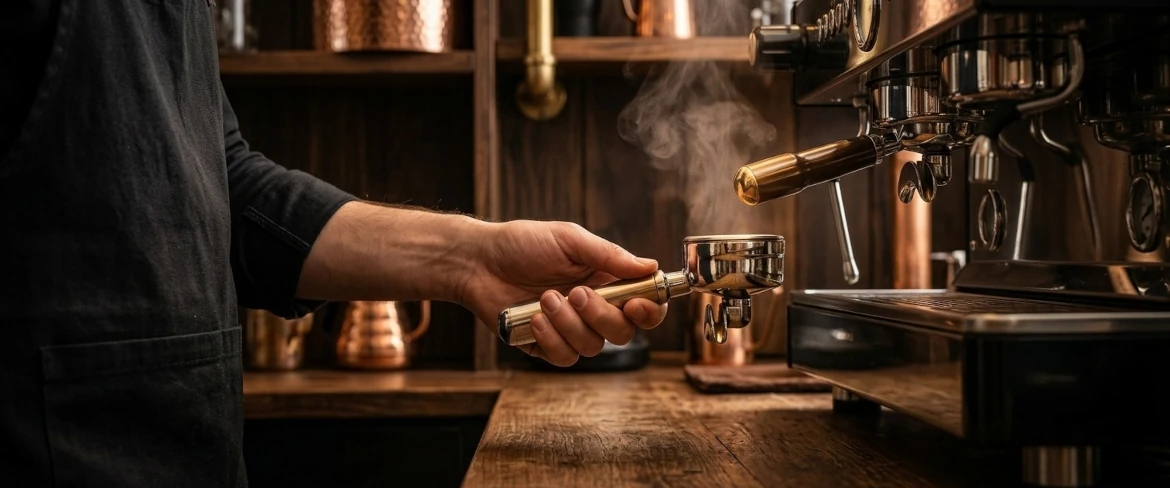
Before we move on to how to prepare this unique brew yourself, let's take a closer look at its structure. In the world of speciality coffee, every gram of beans, millilitre of water, and second of extraction is of immense importance. Ristretto coffee is a perfect example of how a slight change in brewing parameters can completely alter the character of the beverage in the cup. Technically speaking, we are dealing here with extreme condensation, which translates into unique, highly physical sensory experiences.
What makes ristretto coffee stand out?
If we had to describe ristretto in one sentence, it would sound like this: it is a maximally reduced espresso of massive concentration. Although at first glance it just looks like "half a cup of coffee", beneath the surface of the thick hazelnut crema lies a brew with completely different physical properties. The main factor distinguishing this drink from others is the conscious limitation of the amount of water.
Key features of ristretto:
- ☕ intensity and texture: ristretto is much thicker and more aromatic than standard espresso. Its consistency is almost syrupy, which makes the brew pleasantly and persistently coat the palate (creating the aforementioned long aftertaste),
- 💧 small volume: a standard portion is usually only 15-20 ml of liquid. That is literally one or two sips of pure coffee essence,
- ⚡ lower caffeine content: here is the biggest surprise for many beginner coffee drinkers! Despite its powerful, striking aroma, ristretto coffee is not a caffeine bomb at all. The shorter extraction time limits the leaching of caffeine from the beans compared to longer brewed beverages.
💡 Good to know: There is a fairly common misconception that the stronger and more intense the coffee tastes, the more caffeine it contains. In reality, it is the contact time of water with the beans that determines the final content of this stimulant. Ristretto will instantly awaken your senses with its flavour, but physically it will provide you with less caffeine than a classic espresso or a cup of filter coffee.
Ristretto, espresso, and lungo – key differences
To accurately and flawlessly illustrate what is ristretto coffee in a broader context, it is best to compare it with its closest "cousins" from the pressure family – the classic espresso and the decidedly longer lungo. Understanding the differences between them is an absolute foundation for any home barista.
The main difference between this trio comes down to the so-called brew ratio, which is the proportion of water to the dose (the amount of ground coffee used in the portafilter) and the extraction time itself. While ristretto is a "shortened" extraction, espresso is the market's golden standard, and lungo (Italian for "long") is an intentionally prolonged extraction. The table below perfectly illustrates these differences:
| Coffee type | Brew volume | Ratio (coffee : water) | Extraction time |
|---|---|---|---|
| Ristretto | ~15-20 ml | from 1:1 to 1:1.5 | 15-20 seconds |
| Espresso | ~25-30 ml | usually 1:2 | 25-30 seconds |
| Lungo | ~50-90 ml | usually 1:3 (or more) | up to 60 seconds |
As you can see in the above compilation, it is precisely the precise control of time and the amount of water that allows you to extract the best from the beans at any given moment. Now that you know the key parameters and the theory, it's time to move on to practice and fire up the espresso machine!
Ristretto recipe. How to prepare ristretto coffee step by step?
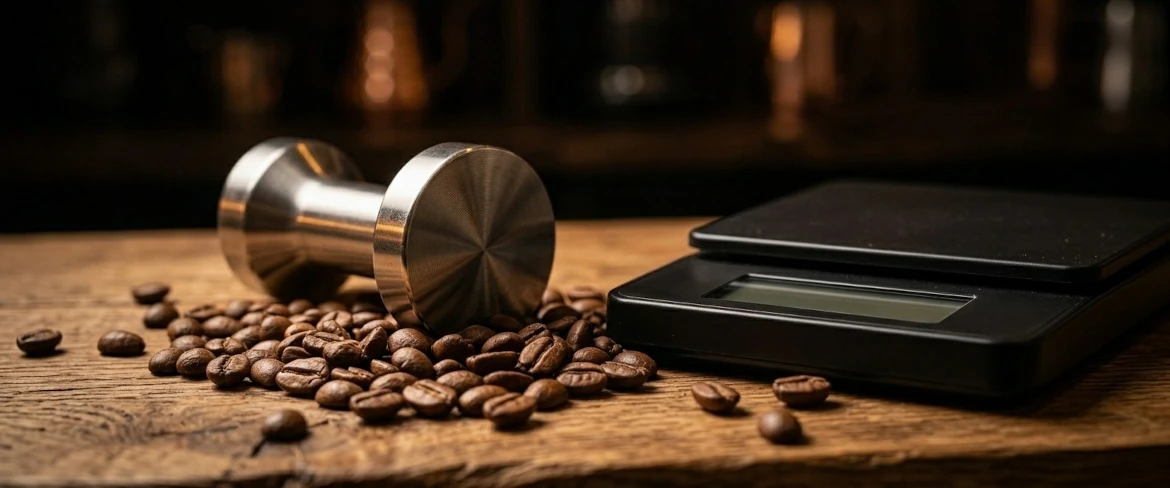
Now that the theory is behind us, it's time to move on to the most enjoyable part – practice. Preparing the perfect ristretto in the comfort of your home (or in a professional café) requires a bit of focus and barista precision. Because we are operating with very small amounts of water and an extremely short extraction time, every detail is of immense importance. A good quality burr grinder and a barista scale will be your best allies in this process.
Below you will find a proven, artisan ristretto recipe, which will serve perfectly as a starting point for your further experiments with an espresso machine.
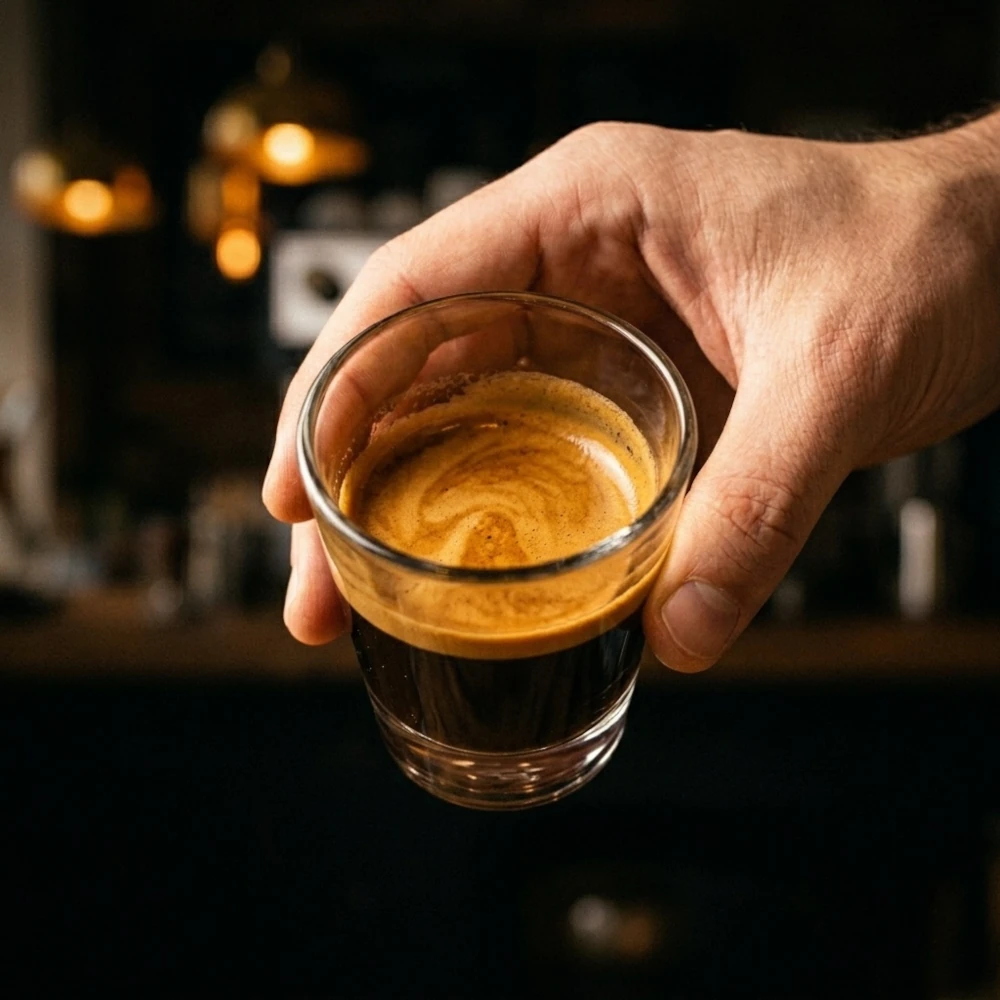
☕ Ristretto coffee – step-by-step recipe
- Weigh and grind the coffee: use the same dose as for a classic double espresso (e.g., 18 g). Grind the beans finely.
- Distribution and tamping: distribute the coffee evenly in the portafilter basket and tamp it firmly and straight.
- Extraction: lock the portafilter into the group head and immediately start the water flow, starting the timer at the same time.
- Ending the brew: stop the extraction after about 15-20 seconds, when the scale under the cup shows the desired yield (e.g., 18-25 g/ml).
- Serving: serve immediately, preferably accompanied by a glass of still water to cleanse the taste buds before tasting.
But can ristretto coffee be made without an espresso machine? True, classic ristretto is a drink that absolutely requires a pressure of around 9 bars, generated by a professional espresso machine. But what if you don't have such equipment at home? Nothing is lost! Although you won't copy this brew 100%, you can prepare a coffee with a very similar, thick and sweet profile using popular home accessories.
Here are the two best home alternatives worth testing:
- ☕ AeroPress (the method closest to the original) – this incredibly versatile device allows you to manually generate a considerable amount of pressure. Use a ratio of approx. 1:3 (e.g., 15 g of very finely ground coffee to 45-50 ml of water). Use the inverted method, pour water at a temperature of approx. 92°C over the coffee, stir vigorously, and after 30-40 seconds press it very firmly through the filter. If you want a thicker texture, use a metal filter, which will let more oils through and provide a fuller body (or possibly two paper filters);
- ☕ Moka pot – although it generates much less pressure than an espresso machine, it can conjure up an incredibly intense brew. Fill the basket with coffee to the brim (remember not to tamp it!), and fill the bottom chamber with hot water only up to half its height (well below the safety valve). Place the moka pot on the burner and take it off the heat immediately when the first thick and dark stream flows into the upper chamber (approx. 20 ml). Do not allow the characteristic bubbling, which will instantly release an unpleasant bitterness.
❌ Avoid this: Pour-over methods, such as a classic dripper (e.g., V60) or Chemex, will not work here at all. They rely solely on gravity and a free, longer brewing time. Attempting to "force" 20 ml of brew out of them would give you a severely under-extracted, watery, and unpleasantly sour coffee – completely devoid of the wonderful, syrupy texture for which we love ristretto so much.
Ristretto coffee – proportions and extraction time
To fully master the art of brewing this Italian essence and understand what lies behind the success of the brew, we must look at the numbers. The perfect recipe relies on iron discipline regarding proportions. Experts usually aim for a ratio of 1:1 to 1:1.5. What does this mean in practice?
If you pour the aforementioned 18 grams of ground coffee into the portafilter basket, your finished brew in the cup should reach a volume of 18 to a maximum of 27 millilitres (grams). In contrast to a classic espresso (where we would get approx. 36 ml of brew), we cut the ristretto extraction almost in half. The brewing time should strictly fit within the window of 15-20 seconds from the moment the pump is started. It is precisely this intentionally shortened contact of hot water with the bean that ensures only the sweetest and most desirable aromas end up in the cup, leaving behind the heavy and astringent bitter compounds in the portafilter that extract in the later stages of brewing.
What coffee beans to use for a ristretto?
Even the best, most expensive equipment will be of no use if poor-quality, stale beans land in your grinder. Because ristretto is so extremely concentrated, absolutely every, even the smallest flaw in the raw material will be magnified in it and immediately hit your taste buds. Therefore, a conscious choice of beans is half the barista's success!
Freshly roasted speciality coffees dedicated to pressure methods will work best for preparing a ristretto. Due to the very short extraction time, beans with naturally very high acidity (e.g., light-roasted, washed coffees from Kenya) may turn out to be too sharp and astringent in a ristretto. A much safer, and at the same time insanely delicious choice for a start will be:
- ✔️ beans from South America (e.g., Brazil, Colombia): rich in thick, dessert notes of chocolate, nuts, nougat, and ripe, sweet fruit,
- ✔️ naturally processed coffees: characterised by higher, natural sweetness and a heavier, more syrupy body, which perfectly harmonises with the thick texture of ristretto,
- ✔️ artisan espresso blends: carefully composed blends by roasters, designed to maintain the perfect balance between sweetness, acidity, and noble bitterness in the cup.
🎯 Expert advice: Always pay attention to the roasting date! You will achieve the most spectacular effects and the most beautiful, thick "tiger" crema in a ristretto using beans that have rested for 14 to approx. 30 days from the roasting date. Proper degassing of carbon dioxide from the coffee will make the water flow more stable and the flavour of the brew much deeper.

What does ristretto coffee taste like?
When you look at these dozen or so millilitres of dark brew at the bottom of the cup, you might feel a slight sense of awe. However, the first sip of ristretto is often a moment of complete surprise! Instead of a hit of overpowering astringency, you get an incredibly smooth, round, and balanced essence. It's as if someone took all the best things from a classic espresso – aroma, sweetness, fruity or chocolate accents – and enclosed them in the form of a thick coffee syrup. If until now you have avoided short, black coffees out of fear of strong bitterness, ristretto can completely change your perception of this beverage and will certainly encourage you to further barista explorations.
Ristretto flavour profile
Remember how in previous paragraphs we mentioned a shortened extraction time? That is the absolute key to understanding the flavour profile of this coffee. During brewing, acidic compounds are released from the beans first, followed immediately by sugars, and only at the very end do heavy, bitter tannins and astringent substances enter the brew. By cutting this process in half, we retain only pleasant acidity balanced by intense, powerful sweetness in the cup.
As a result, ristretto coffee is characterised by:
- ✔️ a lack of astringent bitterness – the coffee is exceptionally smooth and much friendlier to the palate than its "tar-like" appearance would suggest,
- ✔️ distinct sweetness – often resembling warm honey, caramel, nougat, or ripe, candied fruit,
- ✔️ a syrupy body (consistency) – the brew is thick, viscous, and pleasantly coating, which intensifies and significantly prolongs the sensory experience (the famous, lingering aftertaste),
- ✔️ an explosion of aroma – the scent is incredibly condensed and hits the senses immediately after brewing.
Of course, the final flavour will always depend on the origin of the beans, their processing method, and the roast level. If you want to learn more about how to recognise individual accents in a cup and consciously choose a profile for your preferences, be sure to read our comprehensive guide on the blog: The flavours of coffee – a guide to flavour notes and sensory profiles.
Is ristretto stronger than espresso?
This is absolutely one of the most frequent questions asked by beginner (and not only!) coffee drinkers. The answer depends largely on how exactly we define the word "strong". If by strength we mean the intensity of sensory experiences, then yes, ristretto is decidedly the strongest and thickest coffee in the barista ring. Its texture and the rush of aromas make a classic, proper espresso seem almost... light in comparison.
However, if you are asking about the physical caffeine content – the matter looks quite the opposite. It's time to debunk a popular, frequently repeated myth once and for all: a brew with a very intense, strong, condensed flavour does not necessarily have to put you on your feet more than a large mug of light, tea-like filter coffee! Caffeine is a compound that is relatively well soluble in hot water, but this process takes time. Since water is only in contact with the coffee for 15-20 seconds, it physically won't have time to leach all the available caffeine from the finely ground beans. A cup of ristretto will therefore contain slightly less of it than a classic espresso brewed for about 30 seconds.
📌 Summary: Ristretto is a powerful injection of flavour, not caffeine! Due to its slightly lower content, it is actually a perfect choice if you fancy an exceptionally intense, very essential black coffee in the afternoon, but do not want to give your body a massive stimulation and disrupt your evening sleep rhythm.
Most common mistakes when preparing ristretto
Brewing coffee at home is a wonderful adventure, but sometimes the results in the cup can deviate from expectations. Now that you know from previous paragraphs what ristretto is, what the recipe for this coffee is, and how it should taste, you will certainly easily pick up any imperfections on your own palate. Due to the very short extraction and small amount of water, the margin for error with ristretto is virtually minimal. Below we have gathered the most popular traps that beginner baristas fall into, and ways to quickly correct them.
Extraction too short or too long
Time is an absolutely critical factor in the case of ristretto coffee. An extraction that is too short (e.g., lasting only 8 or 10 seconds) will mean that the water will not have time to wash the sweet sugars out of the beans. You will get a massively under-extracted brew – flat, watery, and unpleasantly, aggressively sour. In turn, an extraction that is too long (over 20 seconds) will mean that your cup will simply contain a classic espresso or, worse, a watered-down brew with a dominant, over-extracted, and astringent note (we will start releasing heavy tannins from the coffee).
The key to success is balance. If during your own attempts you have trouble recognising exactly what causes undesirable flavour notes in your cup, our blog post will come to your aid: Coffee acidity and bitterness – how to choose the perfect beans for your taste. Thanks to it, you will find it easier to understand when the coffee is under-extracted and when it is over-extracted.
Incorrect coffee grinding
The grind size of the beans is actually the "steering wheel" of your espresso machine – it dictates the resistance that the coffee in the basket puts up against the water pump. The vast majority of problems with incorrect ristretto extraction time stem precisely from a bad grinder setting.
If the grinder is set too coarse, the water will encounter no resistance and will literally fly through the portafilter in a fraction of a second, resulting in an empty taste. Conversely, if you grind the beans into a fine, floury dust, the espresso machine's pump may not be able to push the water through it. Then your ristretto will drip very slowly (or not at all!), which will produce a heavy, tarry, and highly bitter effect. It is also worth remembering how crucial the moment we grind our coffee is – let's try to do it right before brewing. You can read more about this process in the article: Grinding coffee – why do freshly ground beans change the coffee taste?
🎯 Barista's tip: How to correct mistakes? If your ristretto extraction is running too fast, turn the grinder burrs to a finer setting. If the coffee is barely dripping and brewing for too long – use a slightly coarser grind. Remember to change the grinder settings slowly, literally by millimetres, and test the results after every step!
A properly brewed ristretto is the essence of the highest barista craftsmanship. Although its preparation requires a bit of practice and precision, the satisfaction from a perfectly thick, powerfully sweet and aromatic "shot" rewards every minute spent on grinder calibration. The thick, hazelnut crema and the overpowering aroma that floats in the kitchen are sensations that are easy to fall in love with.
Remember, however, that even the best technique and the most expensive espresso machine will not save poor beans. True brew quality always starts with the raw material. Therefore, arm yourself with top-quality coffee, clean the portafilter in the espresso machine, and discover on your own palate what true Italian tradition tastes like in a modern speciality edition!
Ready for a massive dose of flavour? Test our recipe and discover the taste of Italian tradition!
FAQ – most frequently asked questions about ristretto coffee
1. What is ristretto coffee?
Answering the question "what is ristretto coffee" most simply – it is an extremely "shortened" and reduced espresso. The standard volume of this beverage is merely 15-20 ml. It is a true Italian essence of coffee flavour with a syrupy consistency, traditionally drunk in one gulp.
2. How to make ristretto at home?
The best ristretto recipe requires the use of an espresso machine. Use approx. 18 g of very finely ground beans, tamp them firmly in the portafilter and stop the extraction after 15-20 seconds. As a result, you will obtain 15-20 ml of an incredibly thick brew. If you don't have an espresso machine, a great alternative would be an AeroPress or a moka pot, where you will use a correspondingly smaller amount of water to brew the coffee.
3. Is ristretto more bitter than espresso?
Definitely not! This is a very common myth. Because the extraction is much shorter, the water will not have time to wash heavy, bitter substances and tannins out of the beans. Therefore, ristretto coffee is much smoother, much sweeter, and more balanced than standard espresso.
4. What beans are best suited for ristretto?
Freshly roasted speciality coffee intended for pressure methods (espresso profile) will work best for this type of brew. We particularly recommend beans from South America (Brazil, Colombia) that have undergone natural processing. Their high sweetness, low acidity, and thick body will perfectly find themselves in a cup of ristretto. You will find them in the assortment of our shop.
5. Does ristretto coffee have more caffeine than espresso?
No. Although in terms of sensory experiences ristretto coffee hits the palate with incredible power and condensed aroma, physically it contains slightly less caffeine than classic espresso. This is due to the shorter contact time of hot water with the ground beans.
Recommended

Coffee Broastery - whole bean coffee Brazil Mogiana Premium 400g

Coffee Broastery - whole bean coffee Brazil Mogiana Premium 1kg

Coffee Broastery - Whole Bean Coffee Amico dall'Italia Espresso Roast 1kg
