Step-by-step cold brew. What is macerated coffee and how to prepare the perfect cold coffee at home?
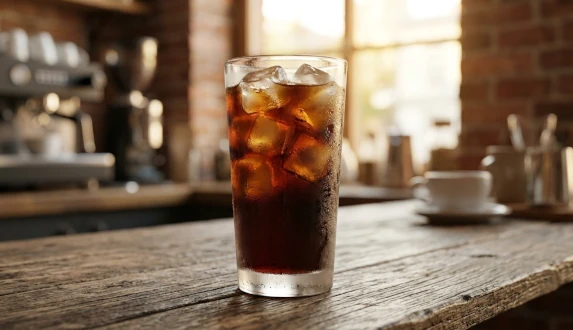
Many of us cannot imagine a day without a hot, stimulating cup of coffee, but there are times when we simply fancy something completely different – regardless of whether spring is slowly waking up outside the window, or it is the middle of a hot summer. That is exactly when cold brew enters the stage, acting as an incredibly refreshing alternative to traditional brews. Although cold coffee is an absolute hit of the warmer months and a permanent fixture on the summer menus of the best speciality cafés, true coffee lovers eagerly reach for it all year round, appreciating its exceptional smoothness and natural sweetness. But do you know exactly cold brew what is it, and why this unusual method of extraction without the use of boiling water has gained such immense popularity?
In this guide, we will uncover all the secrets of this intriguing brewing method for you. We will explain in detail what coffee maceration is all about, what exactly characterises macerated coffee, and why its sensory profile differs so much from classic, hot brews. We have also prepared a reliable and incredibly simple cold brew recipe for you, thanks to which you will learn step by step how to make cold brew in your own kitchen. We will discuss the ideal cold brew proportions, we will hint what coffee for cold brew works best in home conditions, and how to serve the finished beverage (including in the form of a delicate cold brew latte). Ready to elevate your home coffee brewing to a higher level? Let's get started!
Summary:
- Cold brew – what is it and what does brewing cold coffee involve?
- How to make cold brew at home? A simple step-by-step recipe
- What coffee for cold brew will work best?
- Cold brew latte – how to prepare it at home?
- Cold brew – how much caffeine does cold macerated coffee have?
- The most common mistakes when brewing cold coffee
- Cold brew – the simplest way to perfect cold coffee at home
Cold brew – what is it and what does brewing cold coffee involve?
The world of speciality coffee is a space full of constant discoveries and experiments, but rarely does any method change the rules of the game as distinctly as brewing cold coffee. In contrast to traditional techniques, where hot water instantly extracts flavour and aroma compounds from freshly ground beans, this method relies on two completely different foundations: water temperature and time. A long time.
What is cold brew?
Many beginner coffee enthusiasts ask themselves the question: "cold brew coffee what is it exactly?" Simply put, it is a coffee infusion prepared entirely without the use of high temperatures. Instead of pouring hot water over ground beans, we use water at room temperature or cool, filtered water from the fridge.
Skipping the high temperature in the extraction process ensures that intense, bitter oils and sharp acids, which are often noticeable in hot espresso or drip coffee, are not released from the beans. The result? Cold brew coffee is a beverage with an incredibly smooth body, natural sweetness, and high drinkability. No wonder this very method has become the undisputed favourite of coffee lovers all over the world, seeking refreshment without compromising on taste quality.
💡 Good to know: Due to the very low acidity of the infusion, cold brew coffee is often an excellent choice for people who struggle with a sensitive digestive system daily and avoid classic, hot coffee.
Why is cold brew called macerated coffee?
In professional barista literature, the terms defining this method are sometimes used interchangeably. Macerated coffee owes its name to the process itself. Coffee maceration is simply the slow, multi-hour "pulling" of desired flavours, aromas, and caffeine from ground beans by soaking them for a long time in cold water.
Because the water is cold, it lacks the thermal energy for rapid extraction. Therefore, this process must usually last from 12 up to even 24 hours. It is exactly this deliberate, slow, and long contact time between the coffee and water that gives cold brew its unique, deep, and complex sensory profile. The magic of maceration allows subtle chocolate, nutty, and even fruity notes to be drawn from the beans, leaving the unwanted astringency behind in the grounds.
Cold brew vs classic iced coffee – what's the difference?
Another frequently repeated question is: "is standard iced coffee the same as cold brew?" The answer is short: absolutely not! The differences are fundamental and affect what ultimately ends up in our cup.
| Feature | Classic iced coffee | Cold brew (Macerated coffee) |
|---|---|---|
| Preparation method | Brewed classically hot, and then rapidly cooled with ice cubes. | Macerated from start to finish in cold water, without a drop of boiling water. |
| Preparation time | Fast – from a few to several minutes. | Long – from 12 to 24 hours of extraction. |
| Flavour profile and body | Higher acidity, noticeable bitterness. Over time, it can become watery due to melting ice. | Exceptionally smooth texture, distinct, natural sweetness, and an almost complete lack of bitterness. |
As you can see, the difference does not lie in the serving temperature, but in the physics of the extraction itself. Knowing what this extraordinary beverage is, in the next steps we will advise you how to make cold brew so you can enjoy its perfect taste in your own home. Creating the right concentrate is also the best way to easily prepare a velvety cold brew latte with the addition of your favourite milk or plant-based drink.
How to make cold brew at home? A simple step-by-step recipe
Are you wondering how to make cold brew without professional barista equipment? We have great news: preparing this exceptional brew is incredibly easy and absolutely anyone can manage this task in the comfort of their home. You do not need an expensive, advanced espresso machine or complicated accessories.
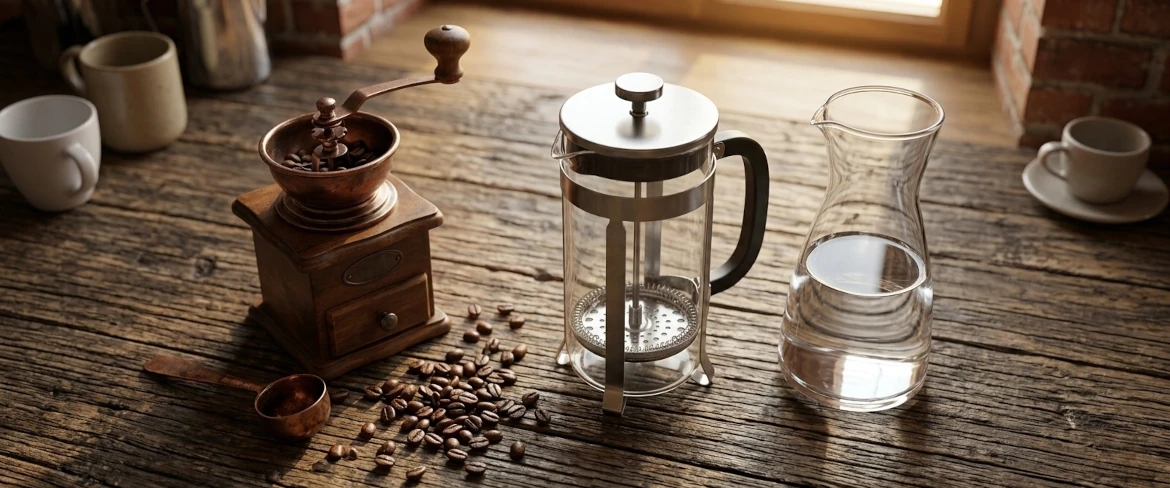
To create the perfect cold brew coffee, you essentially only need four elements: good quality beans, filtered water, an appropriate vessel (a dedicated bottle, a classic French Press, or even a large glass jar will work perfectly) and... a bit of patience. Let's see then: how to make cold brew so that the result delights you from the very first sip?
Cold brew proportions: how much coffee and how much water to add?
The key to success and ideal flavour when preparing cold brew are the correct cold brew proportions. It is the ratio of coffee to water that determines the final strength, intensity, and flavour profile of your beverage. In the world of speciality coffee, we most often encounter two approaches: preparing a ready-to-drink infusion directly or creating a strong concentrate.
If you want to obtain a ready-to-drink brew (to which you might just toss a few ice cubes), the optimal starting point is a ratio of 1:10 (e.g. 60 grams of coffee to 600 ml of water). However, if you prefer to prepare an essential concentrate, which you will later dilute with water or use to create a milky classic, use a ratio of 1:4 or 1:5. Remember that there are no strict rules with this method – when it comes to cold brew how much coffee is ultimately required depends on your taste. It's worth experimenting!
☕ Cold brew recipe (1:10 proportion)
- ✔️ Step 1: Measure 60 g of your chosen coffee and grind it coarsely (a thickness resembling sea salt – a grind that is too fine will make filtering difficult and may introduce unwanted bitterness).
- ✔️ Step 2: Pour the ground coffee into the vessel and cover it with 600 ml of cool, clean, filtered water.
- ✔️ Step 3: Gently but very thoroughly stir everything to ensure that every particle of the beans has come into contact with the water.
- ✔️ Step 4: Cover the vessel and set it aside for maceration.
- ✔️ Step 5: After the required time has elapsed, filter the entire mixture – pour the infusion through a paper drip filter, a fine sieve, or simply press down the plunger in a French Press. Done!
How long should coffee maceration last?
Simply pouring water over the beans is just the beginning of our adventure. Because we already know what cold brew is and that we deliberately avoid high temperatures here (which naturally accelerates extraction), we must give the coffee time in return. The optimal time after which our macerated coffee will reach its full potential is usually between 12 and 24 hours.
Maceration that is too short will make the brew watery, flat in taste, and deprived of its natural sweetness. On the other hand, leaving the grounds in the water for longer than a day may result in the appearance of astringent notes and a very high caffeine content. The extraction time also depends on where you store your vessel:
- 🕒 Maceration at room temperature: the process occurs slightly faster; usually, about 12–14 hours is enough to achieve the ideal taste.
- ❄️ Maceration in the fridge: the low temperature slows down the extraction, which is why the coffee needs 18 to 24 hours. In return, it will reward you with an exceptionally clean, crisp, and subtle flavour profile.
Once you have mastered the basics regarding equipment and time, another crucial question arises for the flavour: what coffee for cold brew will work best, so that the brew can delight you with its full range of aromas? Let's see which beans are worth reaching for!
What coffee for cold brew will work best?
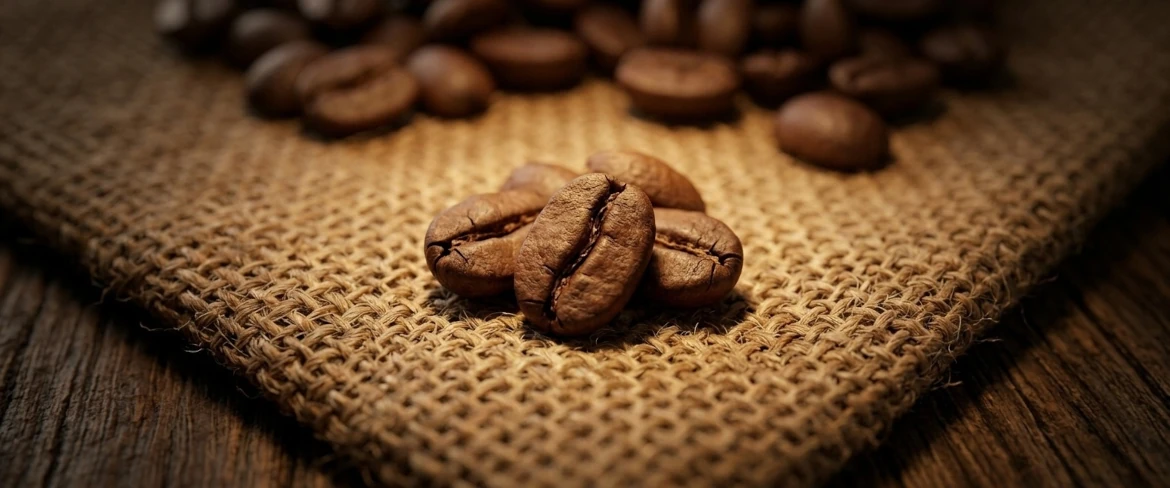
What coffee for cold brew will guarantee you the best experience in a cup (or a glass with ice)? Choosing the right beans for cold brew is the key to success. In the world of speciality coffee, there is no single, predetermined answer, and the possibilities are almost endless. However, you must remember that brewing cold coffee has its own rules. The lack of high temperature means that the water "pulls" slightly different chemical compounds from the beans than during traditional pour-over brewing or in an espresso machine. That is exactly why the beans you reach for will define the character of your beverage. When making a choice, two main factors should be considered: the roast level and the natural flavour profile of the coffee.
Is lightly or darkly roasted coffee better for cold brew?
The choice of the roast level radically changes what we will ultimately feel on our tongue. Because macerated coffee inherently features reduced acidity and natural sweetness, we can successfully experiment with various options:
- ✔️ Lightly roasted coffees (for filters): If you choose lightly roasted beans, your cold brew will gain a light, tea-like character. Expect high refreshment, crisp fruity notes, floral aromas, and a subtle, joyful acidity that will work perfectly on hot days.
- ✔️ Medium and darkly roasted coffees (for espresso): This is a classic of the genre. By choosing such beans, you will obtain a thick, round body and a classic profile where sweetness, chocolate, and nuts will dominate. It is also an ideal base if you plan to add milk to your coffee later.
If you want to better understand what happens to a bean in the roaster and how it affects the contents of your cup, be sure to check out our article: Light, medium or dark? How your coffee roast profile affects the flavour and aroma of speciality coffee.
What coffee grind size should you choose for cold brew?
Even the best speciality beans will not yield a good result if you make a mistake at the grinding stage. For preparing a cold infusion, a very coarse coffee grind works best. The ground particles should resemble coarse sea salt or even fine gravel in size.
Why is this so important? Because the beans will spend between 12 and 24 hours in the water, too finely ground coffee (e.g. to a dust, like for a moka pot or espresso) will lead to so-called over-extraction. This means that a heavy, unpleasant, and dull bitterness will get into the brew, covering all the desired sweetness. Moreover, fine coffee dust will quickly clog the pores in paper filters and sieves, making filtering the finished concentrate a real torment. You can read more about why it is worth taking care of the right grind size and using a good grinder in the post: Grinding coffee – why do freshly ground beans change the coffee taste?
What flavour profiles best suit cold brew?
The magic of cold maceration lies in the fact that this method can beautifully highlight the natural properties of the beans. Classic, smooth, and incredibly drinkable cold brew coffee is usually based on beans from South or Central America (e.g. from Brazil, Colombia, or Guatemala). Their natural sensory profiles are abundant in notes that taste like a liquid dessert in cold water:
- ☕ dark and milk chocolate
- 🥜 hazelnuts, almonds, and macadamia
- 🍯 caramel, toffee, and cane molasses
Do not be afraid, however, to experiment with different origins (countries of origin of the beans). African coffees from Ethiopia or Kenya will bring incredible freshness to your cold brew, notes of citrus, berries, ripe peaches, and jasmine blossom. In our shop, we have made it easier for you to search for the ideal beans – visit the "Flavour notes" category, where we have conveniently divided coffees into chocolate, nutty, citrus, fruity, tea-like, and others. Choose your favourite profile and enjoy the perfect cold coffee!
📌 Summary: The ideal coffee for cold brew is one that you grind coarsely right before pouring water over it. If you prefer heavier, sweeter brews with a chocolate and nutty profile, choose medium-roasted coffees from South America. Looking for refreshment reminiscent of iced fruit tea? Opt for lightly roasted beans from Africa!
Cold brew latte – how to prepare it at home?
Although classic, black cold brew delights with its lightness and richness of natural aromas, many of us cannot imagine our morning (or afternoon) coffee without the addition of velvety milk. And here comes the cold brew latte – the absolute favourite of lovers of milder, creamy, and dessert flavours. How to prepare this beverage in your own kitchen so that it tastes just as good as in your favourite speciality café?
The key to a perfect cold brew latte is to use the previously mentioned concentrate (i.e. a brew steeped in a proportion of e.g. 1:4 or 1:5). Why is this so important? By adding milk and ice cubes to a traditional, lighter brew, you risk the coffee becoming watery and bland. A strong, intense concentrate guarantees that the caffeinated character will easily break through the milky sweetness.
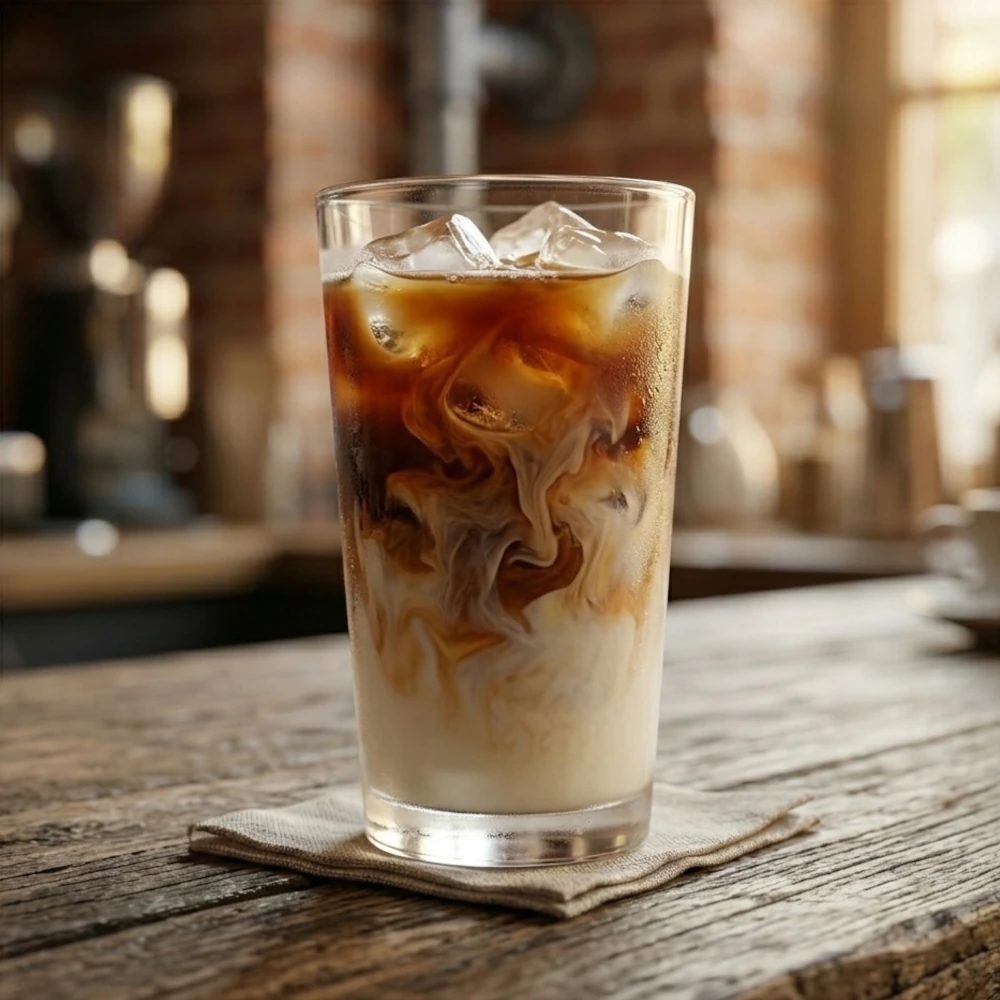
🧊 A simple recipe for the perfect cold brew latte
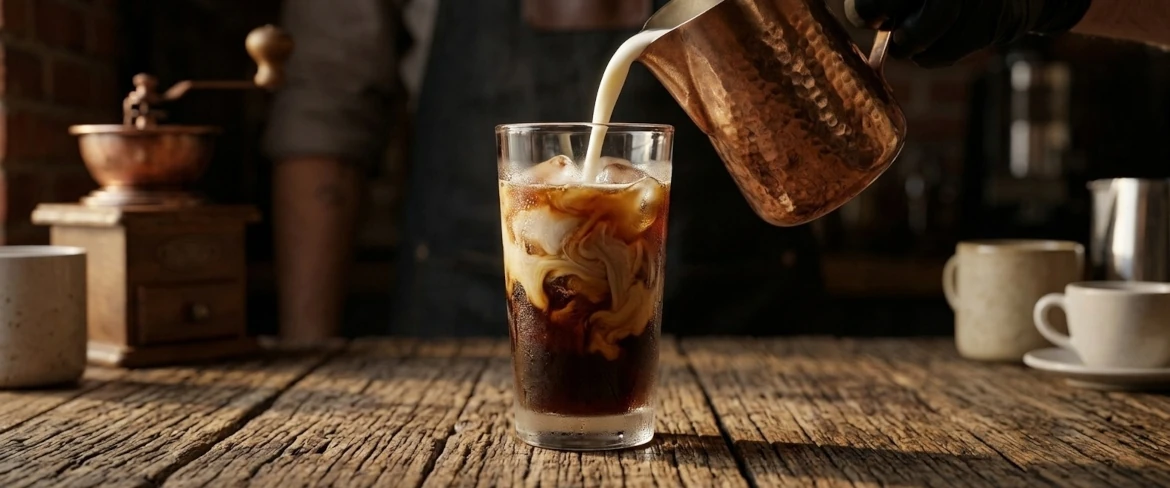
Preparation is trivially simple. Throw a large handful of ice into a tall glass. Pour about 150–200 ml of cold milk (oat drink will also work perfectly here, as it beautifully highlights the nutty and chocolate notes of the beans). At the very end, slowly pour in about 50 ml of cold brew coffee concentrate. Done! It is best to keep a ratio of 1:3 or 1:4 (one portion of coffee to three/four portions of milk), but feel free to modify these values to suit your taste.
How to serve cold brew coffee with milk, ice, or tonic?
The cold coffee maceration method offers huge room for creativity when it comes to serving. The finished concentrate is a great base for many refreshing coffee drinks. Here are the most popular ways to ensure your cold coffee will never bore you:
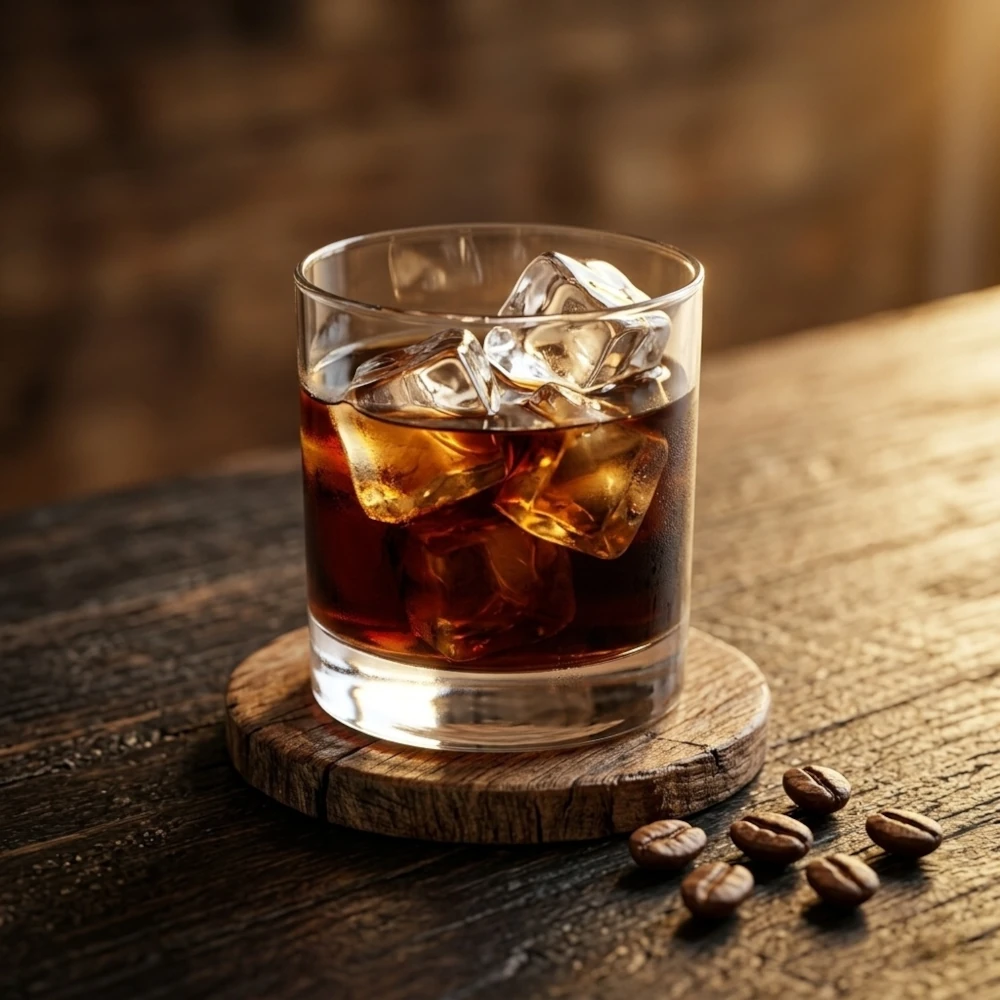
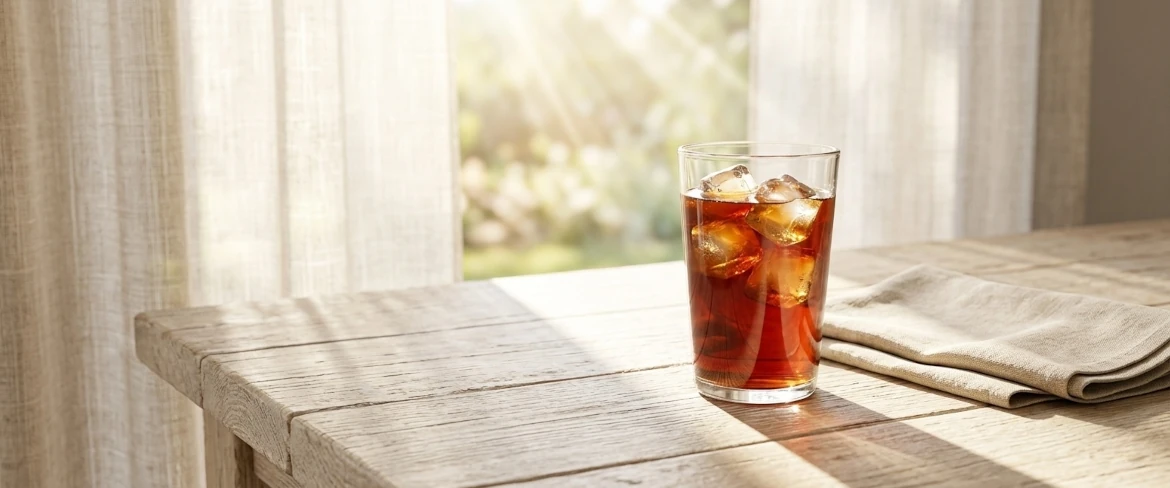
- ✔️ Classically with ice (Cold brew on the rocks): the purest form of tasting. Simply pour the diluted infusion (prepared in a 1:10 proportion) into a glass filled to the brim with ice cubes. For a delicate twist of flavour and added refreshment, you can drop a slice of orange inside.
- ✔️ Cold brew latte with additions: the base recipe for coffee with milk and ice is easy to upgrade. Macerated coffee perfectly accommodates various types of additions – a dash of natural vanilla syrup, caramel syrup, or a pinch of cinnamon will instantly turn the beverage into a delicious dessert.
- ✔️ Cold brew tonic: a real hit, serving as a brilliant alternative to the classic espresso tonic. Pour about 150 ml of good quality tonic water into a glass with ice, and then gently (over the ice cubes) pour in 50 ml of strong concentrate. The bubbles from the tonic combined with the crispness of the cold coffee create an amazing effect. Garnish the whole thing with a wedge of grapefruit or a fresh sprig of rosemary!
How you choose to serve it depends entirely on your imagination and what takes your fancy at the moment. It’s worth remembering, however, that whatever you pair your infusion with, it will give your body a good boost.
Cold brew – how much caffeine does cold macerated coffee have?
When speaking of stimulation and energy levels, cold macerated coffee often sparks a lot of emotion and questions. Its taste is incredibly mild, devoid of bitterness and irritating acidity, which can be deceptive! Many people wonder, regarding cold brew how much caffeine does it actually have? The answer is not straightforward, because the final content of this stimulating substance depends mainly on two key factors: the coffee-to-water proportions used and the method of serving.
If you decide to prepare a very strong concentrate (for example, in a 1:4 proportion) and drink it without diluting, you will supply your body with a massive dose of caffeine. Conversely, if you combine the same concentrate with a large amount of milk, water, or tonic – preparing, for example, a mild cold brew latte – the caffeine concentration in the volume of the entire beverage will naturally drop. It all depends, then, on how you prepare your cold coffee.
Cold brew – how much caffeine does it have compared to traditional coffee?
Many baristas and coffee enthusiasts repeat that cold brew is a true "caffeine bomb". However, where does the common belief come from that cold coffee is much stronger than a traditional, hot brew? The answer lies in the brewing process.
Caffeine is a substance that dissolves exceptionally well and quickly in hot water. Although in the case of maceration we completely eliminate high temperatures, we replace it with something equally effective – a very long contact time between the ground beans and the water. Extraction lasting from 12 to 24 hours means that the water is able to "pull" almost all the available caffeine from the beans. Additionally, for preparing cold brew we usually use significantly more ground coffee per 100 ml of water than is the case, for example, with classic pour-over brewing. It is exactly this high dose of beans and extraction time that make a glass of black cold brew capable of putting you on your feet more effectively than a standard mug of hot coffee from an espresso machine!
💡 Fun fact: It is estimated that a standard portion of undiluted cold brew (approx. 200 ml, at a 1:10 ratio) can contain from 150 to even 200 mg of caffeine. For comparison, a single espresso usually has about 60–80 mg of caffeine.
The topic of caffeine content in individual brews can be fascinating. If you want to find out how cold coffee compares to other popular beverages and are wondering what will wake you up faster – a short black coffee, a large drip, or maybe a milky cappuccino, be sure to check out our comprehensive article: How much caffeine is in coffee? Find out how much caffeine is in espresso, latte and other types of coffee.
The most common mistakes when brewing cold coffee
Although brewing cold coffee seems trivially simple (after all, you just need to pour water over the beans and arm yourself with patience), it is not hard to make minor stumbles in home conditions. Even the best quality speciality beans will not save the brew if chaos creeps in at the preparation stage. A few basic mistakes can make our desired macerated coffee turn out flat, cloudy, overly bitter, or simply lacking expression. What should you watch out for to enjoy perfect refreshment?
Wrong proportions – the most common mistake with cold brew
As we mentioned in previous parts of the guide, when preparing cold brew, the right cold brew proportions are essential – this is the absolute foundation of success. By putting the kitchen scale away in the cupboard and pouring ground beans "by eye", you deprive yourself of control over the final taste.
Too little coffee in relation to water will make the brew watery, bland, and devoid of its wonderful, chocolate-fruity character. On the other hand, exaggerating in the other direction (too much coffee and too little water) will result in an undrinkable, extremely heavy and astringent extract that will dominate even a large amount of milk and ice (if you are preparing, for example, a cold brew latte). If you are just starting your adventure, stick to the iron rule of 1:10 (for a ready brew) or 1:4 (for a concentrate). Over time, you will surely sense with cold brew how much coffee is needed to perfectly hit your individual taste.
Too finely ground coffee for cold brew
Another "cardinal sin" is the improper preparation of beans. Too finely ground coffee for cold brew (e.g. the thickness of sand, like for a moka pot or espresso machine) is almost a guarantee of a culinary disaster. Why does this happen?
Fine dust combined with many hours of contact with water leads to the phenomenon of so-called over-extraction. As a result, the cold coffee becomes unpleasantly bitter, astringent, and very cloudy. What is more, tiny coffee particles easily clog the pores in paper filters and penetrate through metal sieves, creating an unappetising, muddy residue at the bottom of the glass. Always opt for a very coarse grind – the particles should resemble coarse sea salt crystals!
Too short or too long coffee maceration
Coffee maceration is a process that rewards the patient. Time plays a role here just as crucial as temperature in traditional brewing methods. Ignoring your watch and calendar will quickly take its toll on the quality of what ends up in your cup.
If you interrupt the extraction and filter the grounds too early (e.g. after just 6 or 8 hours), the brew will simply be under-extracted, weak "coffee-flavoured water", completely devoid of natural sweetness and depth. On the other hand, if you forget about your jar and leave the grounds in the water for much longer than 24 hours (e.g. for two full days), undesirable, very heavy, and bitter chemical compounds will start to release from the beans. The golden window in which cold brew coffee tastes best is usually between 12 and 24 hours.
📌 3 things that cold brew does not forgive:
- ❌ Grinding "to a dust" – leads to a bitter taste and filtration problems.
- ❌ Lack of a scale – proportions "by eye" are a flavour lottery.
- ❌ Extraction over 24 hours – the brew loses its natural sweetness in favour of astringency.
Cold brew – the simplest way to perfect cold coffee at home
You already know perfectly well what is cold brew and why this method has become an absolute hit among lovers of caffeinated refreshment. As you can see, preparing the perfect brew in home conditions does not require expensive equipment or specialist barista skills. All you need is coarsely ground, good quality coffee, clean, cool water, sticking to proven proportions (e.g. 1:10 for a ready drink or 1:4 for an essential concentrate), and a bit of patience. It is this uncomplicated process that makes macerated coffee reward you in the glass with an incredibly smooth, deep taste devoid of irritating bitterness.
Remember that brewing cold coffee is above all great fun and offers huge room for creativity. Regardless of whether you choose lightly roasted beans from Africa to obtain a crisp brew full of fruity notes, or you opt for a classic, chocolate-nutty base from South America, which will brilliantly compose with milk in the form of a cold brew latte – the key to success is experimenting. Try different origins, change the extraction time, and find your own, unique cold brew recipe for the perfect cold coffee!
Ready for a completely new version of your favourite coffee? Pour water over the beans overnight and let time do all the work for you!
FAQ – frequently asked questions about cold brew coffee
1. How long can cold brew stay in the fridge?
Ready cold brew is an incredibly graceful beverage to store. A clean, well-filtered brew (or concentrate) closed in a sealed vessel, e.g. in a glass bottle or a jar with a seal, can stay in the fridge for 7 up to even 10 days, without losing its wonderful flavour properties. Over time, however, the delicate fruity or floral aroma notes may start to fade. Remember the most important thing: never store coffee in the fridge together with the grounds!
2. Can you make cold brew from store-bought ground coffee?
Theoretically yes, but in practice, we strongly advise against it. Ready ground coffee available in supermarkets is usually ground very finely – with espresso machines or traditional "pour-over" in mind. If you use it to make cold brew, you will lead to strong over-extraction. Your macerated coffee will turn out extremely cloudy, bitter, astringent, and will cause huge difficulties during filtration. Always choose coffee beans and grind them very coarsely right before brewing.
3. Do you have to filter cold brew after maceration?
Definitely yes! When the appropriate time has passed (e.g. from 12 to 24 hours) and you already know that your cold coffee has reached its ideal taste, you must completely separate the liquid from the grounds. If you left the grounds in the water, the extraction process would continue, which after several dozen hours would make the beverage undrinkable due to the release of heavy and very bitter chemical compounds from the beans. To filter, use a paper drip filter, clean gauze, a fine sieve, or the press in a French Press.
4. Can ready cold brew be heated?
Of course! Although this method is famous as "cold coffee", you can successfully heat the ready, filtered brew (or concentrate). All you need to do is add hot water to a strong concentrate or gently heat the whole thing in a saucepan. Remember one rule, however: coffee must not be brought to a boil! Boiling will destroy its delicate aromas and make the brew bitter. A properly heated beverage will retain the unique features of cold brew – it will have exceptionally low acidity, zero bitterness, and huge smoothness. This is an excellent option for people with a sensitive stomach who prefer to drink warm beverages in autumn or winter!
5. How many calories does cold brew coffee have?
Classic, black cold brew coffee prepared exclusively from ground beans and clean water has trace amounts of calories – about 2 to 5 kcal per large glass. Therefore, it is an ideal beverage for people on a diet and works great before a workout. Remember, however, that the situation changes drastically when you start modifying the recipe and prepare, for example, a cold brew latte by adding full-fat milk, flavour syrups, or whipped cream.
Recommended
Electric coffee grinder 150W
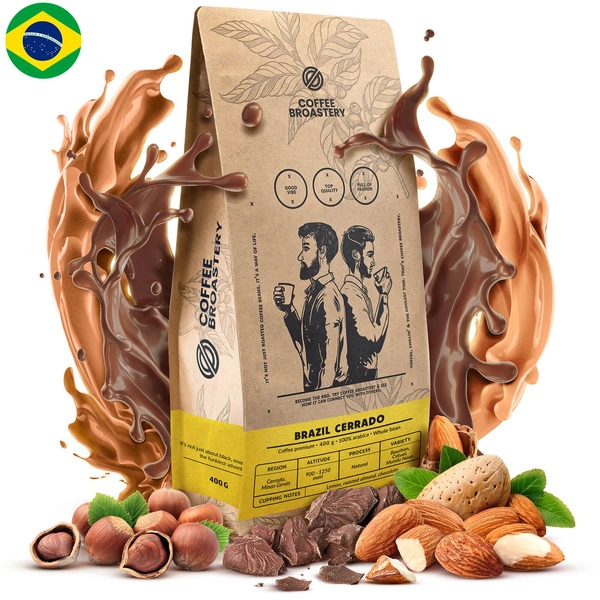
Coffee Broastery - whole bean coffee Brazil Cerrado Premium 400g

Coffee Broastery - whole bean coffee Brazil Mogiana Premium 400g