How much caffeine is in coffee? Find out how much caffeine is in espresso, latte and other types of coffee
How much caffeine is in coffee and does every cup work the same way? This is a question many coffee lovers ask themselves – both those looking for a strong boost before a busy day and those who want to consciously control their caffeine intake. For some, it’s all about that energetic morning “kick”; for others, it’s steady, gentle stimulation without the feeling of being overstimulated. Every serving can contain a completely different dose of this natural stimulant.
The answer is not as straightforward as it might seem. How much caffeine is in coffee depends on the type of beans, the brewing method, the volume of the drink, and even the proportion of milk or the amount of coffee used. The differences can be significant – an espresso drunk in two sips may contain a different amount of caffeine than a large mug of filter coffee, and instant coffee is not always as “weak” as is commonly believed. In this article, we’ll take a closer look at the key factors that influence caffeine in coffee and explain exactly how many milligrams of caffeine is in coffee in various forms – from espresso, through cappuccino and latte, to classic black coffee and instant coffee.
If you want to choose your favourite coffee more consciously – whether it’s a classic espresso, a creamy cappuccino or a pour-over brewed in a dripper – this guide will help you understand the differences and match your level of stimulation to your own needs. With specific values and practical comparisons, it will be easier to assess how much caffeine is in one coffee in your case and how to control your intake throughout the day.
Summary:
- Caffeine in coffee – what determines how much there is?
- How much caffeine is in a cup of coffee? Basic values
- How much caffeine is in espresso and drinks based on it
- How much caffeine is in black coffee brewed traditionally?
- How much caffeine is in instant coffee?
- How much caffeine per day can be consumed safely?
Caffeine in coffee – what determines how much there is?
Every cup of coffee can work differently. What really determines how much caffeine is in coffee? Contrary to popular belief, it’s not only about whether you choose espresso, cappuccino or classic black coffee. The final caffeine content depends on several overlapping factors – from the beans themselves, through the extraction method, to the volume of the drink in your cup.
Two “identical” cups of coffee can differ by several dozen milligrams of caffeine. So if you are wondering how much caffeine is in a cup of coffee in your case, the answer will always depend on the details of how it was prepared.
Type of beans and the amount of caffeine in coffee
The first and most fundamental factor is the coffee variety. It largely determines how much caffeine is present in the dry mass of the beans and, consequently, how much ends up in the brew. The two most common species are Arabica and Robusta.
💡 Arabica vs Robusta – which coffee has the most caffeine?
If you’re wondering which coffee has the most caffeine, the answer is clear – Robusta. It contains on average around 2 to 2.7% caffeine in its dry mass, whereas Arabica usually falls within the range of 1–1.5%. The difference is significant and directly affects how much caffeine is in one coffee prepared from a particular bean.
A higher caffeine content means a stronger stimulating effect, but also a more intense and often noticeably more bitter flavour profile. This is why high-quality Arabica dominates the speciality coffee world – offering a more complex sensory profile with a moderate caffeine level. A good example would be classic Brazilian coffees, appreciated for their chocolate and nut notes combined with a well-balanced level of stimulation.
In practice, this means that two coffees of the same volume but made from different beans can contain completely different amounts of caffeine. This is especially important if you are monitoring how much caffeine per day you consume – the safe daily intake for a healthy adult is up to around 400 mg, and a single serving should not exceed 200 mg (according to EFSA recommendations).
Brewing method and its impact on how much caffeine is in coffee
Choosing the right beans is only the beginning. The brewing method is just as important. The contact time between water and coffee, temperature, grind size and proportions all influence extraction – and therefore the final caffeine content in your cup.
For example, how much caffeine is in espresso? On average, espresso contains around 57–90 mg of caffeine per 30–40 ml serving, although studies show a wider range (approximately 32–153 mg). In contrast, how much caffeine is in a double espresso? The caffeine content in a double shot is most often between 120–180 mg, depending on the dose and extraction parameters. The short brewing time under high pressure produces a concentrated drink – which is why people often ask: how much caffeine is in espresso compared to filter coffee?
With pour-over methods such as a dripper or Chemex, extraction takes longer and the drink volume is larger. So, how much caffeine is in black coffee brewed in a dripper? A 250 ml serving can contain as much as 80–150 mg of caffeine, even though the caffeine concentration per 100 ml is lower than in espresso. If you’d like to better understand extraction differences, take a look at our guide to pour-over brewing: Coffee dripper – how to brew coffee using a dripper to get maximum flavour?
Another category is instant coffee. How much caffeine is in instant coffee? On average, around 60–80 mg per 160 ml serving, although this depends on the amount and quality of the granules used. Interestingly, instant coffee can sometimes contain more caffeine than very weakly brewed ground coffee.
The equipment used also matters. An automatic or manual espresso machine, as well as alternative brewing methods using coffee accessories, allows you to precisely control extraction parameters – and therefore consciously influence how much caffeine is in coffee from a machine or from a pour-over.
📌 Coffee from a machine, ground coffee and instant coffee – what affects caffeine content?
- ✔️ More coffee in the portafilter or filter = potentially more caffeine in the brew.
- ✔️ Longer extraction time = greater caffeine release.
- ✔️ Larger drink volume = a higher total dose of caffeine in your cup.
This is precisely why the answer to the question of how much caffeine is in coffee from a machine or how much caffeine is in ground coffee is not fixed – it depends on settings, recipe and proportions. And that gives you full control over how strong your daily cup will be.
Volume of the drink – cup, mug or glass of coffee
Even if you use the same beans and the same brewing method, the key factor is simply… the size of the serving. In practice, this determines how much caffeine is in one coffee and how much actually enters your system.
A typical cup of coffee (approx. 150–250 ml) provides on average 50–150 mg of caffeine, although studies show that the range can be much wider – from 20 up to even 300 mg per serving, depending on the type of coffee and the brewing method. That is why the answer to the question how much caffeine is in one coffee always requires clarification: how large is the serving?
A small espresso (30–40 ml) usually contains 57–90 mg of caffeine, whereas a large mug of filter coffee (300 ml) may provide as much as 120–180 mg. It’s no surprise that many people type into search engines the question: “mug of coffee – how much caffeine?” – because volume often makes the biggest difference. And how much caffeine is in a glass of coffee? If we are talking about 250–300 ml of brewed coffee, the amount will be similar to a stronger filter coffee – often exceeding 100 mg.
How much caffeine is in coffee per 100 ml and why does it matter?
To reliably compare different types of coffee, it is useful to reduce them to the same volume – for example, 100 ml of the drink. This common reference point allows you to objectively assess the caffeine concentration and compare espresso, filter coffee and instant coffee – regardless of cup size.
Average values look as follows:
- ✔️ Espresso – approx. 150–300 mg / 100 ml (high concentration, but small volume).
- ✔️ Filter coffee – approx. 40–60 mg / 100 ml.
- ✔️ Instant coffee – approx. 30–50 mg / 100 ml.
Such comparisons make it easier to control how many milligrams of caffeine is in coffee that you actually drink. For example, 250 ml of coffee with a concentration of 50 mg / 100 ml will provide about 125 mg of caffeine. That is already more than half of the recommended maximum single serving.
How much caffeine is in a cup of coffee? Basic values
Now that we know caffeine content depends on many factors, it’s time to answer more specifically: how much caffeine is in a cup of coffee in practice? Laboratory analyses confirm that a typical serving (approx. 150–250 ml) usually contains between 50 and 150 mg of caffeine. However, this is an average value – actual results can be both lower and significantly higher.
A 2024 study covering nearly 300 samples of coffee served in cafés and prepared at home revealed considerable variation in caffeine content – from several dozen to over 300 mg per serving. This means that the answer to the question how many milligrams of caffeine is in coffee always depends on the specific case.
* R. E. Wierzejska, I. Gielecińska, Evaluation of the Caffeine Content in Servings of Popular Coffees in Terms of Its Safe Intake – Can We Drink 3–5 Cups of Coffee per Day, as Experts Advise?, Nutrients, 2024.
| Type of coffee | Average caffeine content (mg / serving) | Typical volume (ml) |
|---|---|---|
| Espresso | 57–90 mg | 30–40 ml |
| Americano | approx. 140 mg | approx. 225 ml |
| Cappuccino | approx. 110 mg | approx. 180–190 ml |
| Latte / Latte macchiato | approx. 95–100 mg | approx. 200 ml |
| Instant coffee | approx. 60–80 mg | approx. 160 ml |
It is worth noting that milk-based drinks – although milder in taste – still contain caffeine. If you are wondering does cappuccino contain caffeine or how much caffeine is in a latte, the answer is yes – because they are based on espresso. Milk does not remove caffeine; it simply dilutes the drink and changes its flavour profile.
So instead of asking generally, “how much caffeine is in one coffee?”, it is better to specify: which coffee, what volume, and how many espresso shots it contains. Only then can you realistically assess how strong its effect will be.
How much caffeine is in espresso and drinks based on it
Coffees prepared on the basis of espresso are now absolute classics – both in speciality cafés and at home. Although espresso has a small volume, it is a concentrated source of caffeine in coffee. It forms the base for drinks such as americano, cappuccino and latte.
However, it is worth remembering that a smaller volume does not always mean the highest total dose of caffeine per serving. Below, we take a closer look at how much caffeine is in espresso and how this value changes depending on how the drink is served.
Espresso – how much caffeine is in this small black coffee?
A standard espresso (30–40 ml) contains on average 57–90 mg of caffeine, although studies show that the range can be wider – from around 32 up to even 150 mg depending on the beans used and extraction parameters.
Many myths have grown around espresso. The most common is that it always contains “the most caffeine”. In reality, espresso has a high caffeine concentration per 100 ml, but because of its small volume it often provides less total caffeine than a large mug of filter coffee.
It is also worth mentioning variations such as lungo – a longer-extracted espresso with a greater volume. If you would like to learn more about this version, take a look at our guide: Espresso lungo – what is this coffee and how to make it at home?
☕ Double espresso – how much caffeine is in a double espresso and is it twice as strong?
How much caffeine is in a double espresso? Most often between 120 and 180 mg, as it is prepared using a double dose of ground coffee. In practice – as with any brewing method – this depends on the gram weight and recipe, but a double espresso generally provides roughly twice as much caffeine as a single shot.
And does it work twice as strongly? Theoretically yes – if the caffeine content is doubled. However, the perceived level of stimulation also depends on individual tolerance and how much caffeine has already been consumed during the day.
Americano – how much caffeine is in an americano?
An americano is made by adding hot water to espresso. As a result, you get a larger drink, but the amount of caffeine remains the same as in the espresso used. If it is based on a single shot, then how much caffeine is in an americano? Usually around 60–90 mg. If a double espresso is used – proportionally more.
This is an important distinction: a larger cup does not automatically mean a higher caffeine dose. An americano may taste milder than espresso, but its stimulating effect depends on the number of shots used, not on the added water.
On average, a serving of americano (approx. 225 ml) contains around 140 mg of caffeine, which makes it one of the stronger options in many cafés – especially when prepared with a double espresso.
Cappuccino and latte – does coffee with milk have less caffeine?
Many people wonder how much caffeine is in cappuccino and how much caffeine is in a latte. Online searches such as “cappuccino – how much caffeine” are very common. It is often assumed that milk significantly reduces caffeine content – yet espresso remains the primary source of caffeine in these drinks.
A standard cappuccino (approx. 180–190 ml) contains on average around 110 mg of caffeine. So if you are asking how much caffeine is in cappuccino, the answer mainly depends on the number of espresso shots used. A classic latte (approx. 200 ml) contains around 95–100 mg. The differences result primarily from the proportion of milk and the number of shots.
Milk changes the flavour, texture and volume of the drink, but it does not “neutralise” caffeine. Therefore, if you are wondering how much caffeine is in coffee with milk or how much caffeine is in a latte, first consider how many espresso shots it contains.
In summary: in milk-based coffees, it is not the milk that determines the strength of the drink, but the amount of espresso used. So when you order a large latte with a double shot, you may be consuming as much caffeine as in a solid mug of black coffee.
How much caffeine is in black coffee brewed traditionally?
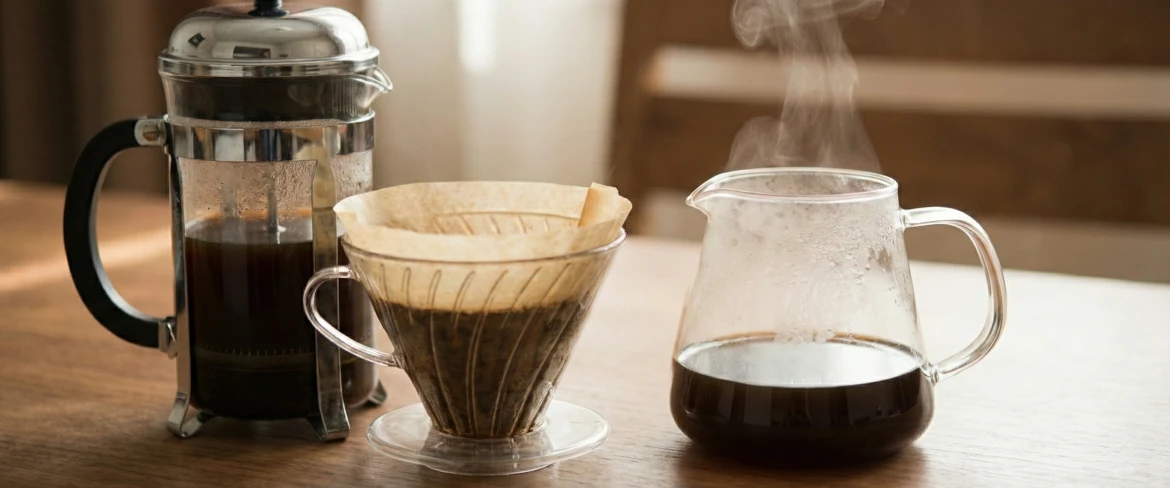
Classic black coffee without milk or additives, prepared at home – whether in a cup, a cafetière (French press), or a moka pot – remains one of the most popular brewing methods. And very often, it is precisely this type of coffee that provides more caffeine than a small espresso.
The key factor is the larger volume of the drink. While espresso measures 30–40 ml, traditional black coffee is usually 200–300 ml. Even if the caffeine concentration per 100 ml is lower than in espresso, the total amount consumed in one serving may be higher. That is why the answer to the question how much caffeine is in black coffee often surprises people – especially those convinced that espresso is always the “strongest”.
Studies show that a typical serving of home-brewed black coffee (approx. 250 ml) may contain between 80 and 150 mg of caffeine, and in some cases even more – depending on the amount of coffee used, the grind size and the extraction time.
Ground coffee – how much caffeine does it contain?
Ground coffee, simply brewed by pouring hot water directly over the grounds in a cup, is one of the simplest preparation methods. Although it is sometimes considered “milder”, in practice its strength mainly depends on proportions.
How much caffeine is in ground coffee? If you add one level teaspoon (approx. 5–6 g) to a cup (approx. 200 ml), the brew may contain around 40–90 mg of caffeine. With a larger amount of coffee or a longer brewing time, this value may exceed 100 mg.
In the case of traditional brewing, how much caffeine is in one coffee depends primarily on:
- ✔️ the amount of coffee used (more grams mean more caffeine),
- ✔️ the type of beans (Robusta increases caffeine content),
- ✔️ the contact time between coffee and water,
- ✔️ the brewing temperature.
Similar principles apply to coffee prepared in a moka pot. Although its flavour may be more intense, the caffeine in coffee still depends mainly on the quantity of coffee used and the final volume of the brew. If you would like to perfect this method at home, see our guide: How to make coffee in a moka pot? A practical guide to help you brew the perfect stovetop coffee!
In summary: classic black coffee brewed traditionally does not have to be weaker than espresso. On the contrary – due to its larger volume, it often delivers a comparable or even higher total dose of caffeine in a single cup.
How much caffeine is in instant coffee?
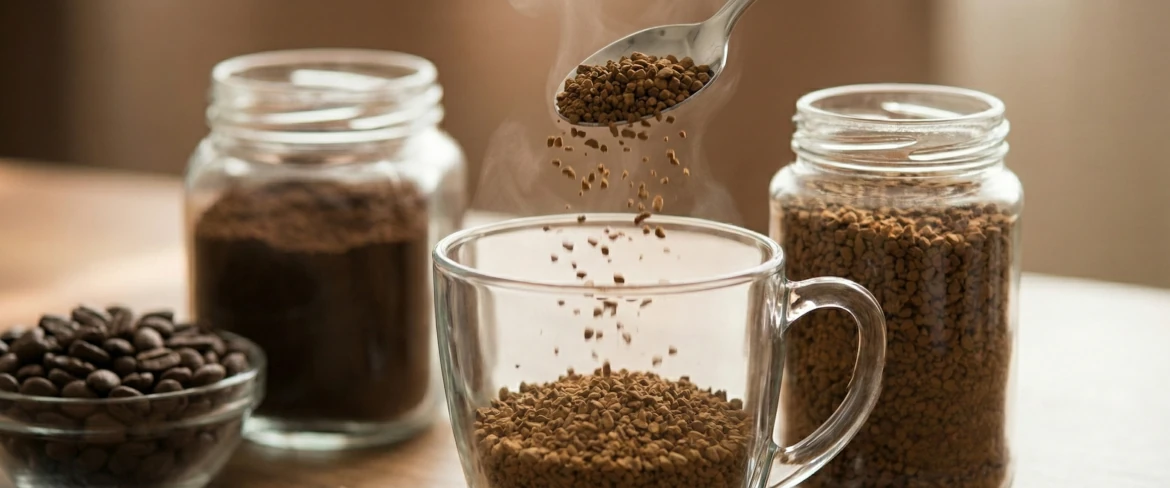
For years, instant coffee has been regarded as a “milder” alternative to ground coffee or espresso. In practice, however, its stimulating effect does not necessarily have to be significantly weaker. How much caffeine is in instant coffee? On average, one cup (approx. 160 ml, 1 teaspoon of granules) provides around 60–80 mg of caffeine, although studies report a wider range – from approx. 38 to 115 mg per serving.
This means that in terms of caffeine content, instant coffee often falls within the lower or middle range of typical traditionally brewed black coffee. The difference lies mainly in the production process – instant coffee is made from previously brewed and dried coffee extract. As a result, its strength is more consistent and easier to control than in the case of ground coffee, where the amount used is often measured “by eye”.
Interestingly, very weakly brewed Arabica ground coffee may contain less caffeine than a standard serving of instant coffee. Therefore, the belief that instant coffee is always the “lightest” option is not entirely supported by scientific research.
In summary, in its instant form, coffee usually contains enough caffeine to provide stimulation, but it rarely exceeds 100 mg in one standard cup. As with other brewing methods, the key factors remain portion size and the amount of coffee used.
How much caffeine per day can be consumed safely?
We have explained in detail how much caffeine is in coffee in its various forms – from espresso to black filter coffee. A natural question follows: how much caffeine per day can be consumed while maintaining safety and comfort?
According to the European Food Safety Authority (EFSA), for a healthy adult the safe total daily intake of caffeine is up to around 400 mg. A single serving should not exceed approximately 200 mg. In practice, this means that it all depends on which coffee you choose and in what quantity.
📌 What does that mean in cups?
- ✔️ 3–5 cups of weaker coffee (60–80 mg each) – usually remain within the safe range.
- ✔️ 2–3 large mugs of strong filter coffee (120–150 mg each) – may already approach 400 mg.
- ✔️ 2 double espressos (approx. 150–180 mg each) – can total 300–360 mg of caffeine.
It is worth remembering that caffeine does not come only from coffee. It is also found in tea, energy drinks, cola and chocolate. So if you are wondering how much caffeine is in one coffee and whether you can afford another, take into account your total intake throughout the day.
Your response to caffeine is also highly individual. For one person, 200 mg may feel strong; for another, barely noticeable. The key is observing your own body and making conscious choices about the type and quantity of coffee you consume.
Now that you know how much caffeine is in espresso, black coffee and instant coffee, you can tailor your daily routine to enjoy the best of coffee – flavour, aroma and energy – without exceeding safe limits.
Choose your favourite coffee and enjoy energy exactly in the amount you need.
FAQ – the most common questions about caffeine in coffee
1. How much caffeine is in one coffee?
It depends on the type of coffee and its volume. A typical cup (150–250 ml) contains on average 50–150 mg of caffeine. Espresso usually has 57–90 mg, while a large mug of filter coffee may exceed 120–180 mg. That is why the answer to the question “how much caffeine is in one coffee?” always requires clarification – which coffee and how large the serving is.
2. Does cappuccino contain caffeine?
Yes. Cappuccino is based on espresso, which means it contains caffeine. A standard serving (approx. 180–190 ml) provides around 110 mg of caffeine. If you are wondering how much caffeine is in cappuccino, the key factor is the number of espresso shots used.
3. Which coffee has the most caffeine?
Robusta contains the most caffeine in its dry mass – even twice as much as Arabica. In practice, however, large servings of filter coffee or an americano made with a double espresso may also be very strong. In terms of concentration per 100 ml, espresso has the highest level, but due to its small volume it does not always provide the largest total caffeine dose.
4. How much caffeine is in espresso and a double espresso?
A single espresso (30–40 ml) contains on average 57–90 mg of caffeine. A double espresso typically provides 120–180 mg. The exact amount depends on the coffee dose and extraction parameters.
5. How much caffeine is in a mug of coffee?
A large mug of filter coffee (300 ml) may contain 120–180 mg of caffeine, depending on the strength of the brew. This is why questions such as “how much caffeine is in a mug of coffee?” are so common – volume makes a significant difference.
6. How much caffeine per day can be consumed safely?
For a healthy adult, the safe daily intake is up to around 400 mg of caffeine, and a single serving should not exceed 200 mg. In practical terms, this usually means 3–5 cups of weaker coffee or 2–3 larger servings of strong coffee.
Recommended
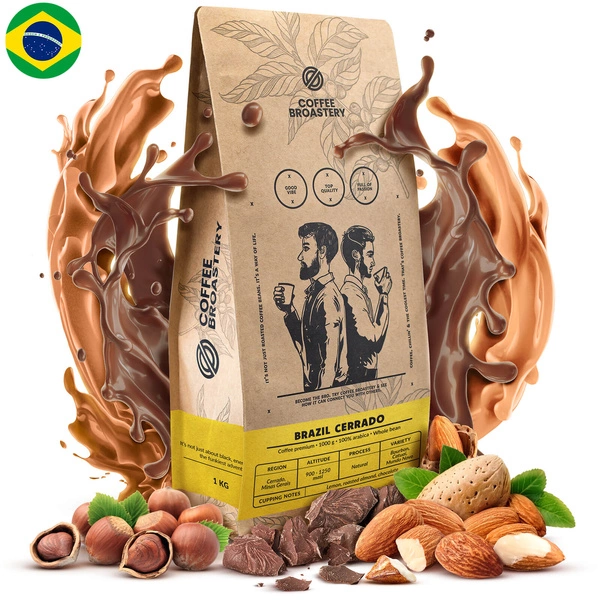
Coffee Broastery - Whole Bean Coffee Brazil Cerrado Premium 1kg

Coffee Broastery - whole bean coffee Brazil Mogiana Premium 1kg

Coffee Broastery - Whole Bean Coffee Brazil Guaxupe Premium 1kg