
Coffee dripper – how to brew coffee using a dripper to get maximum flavour?
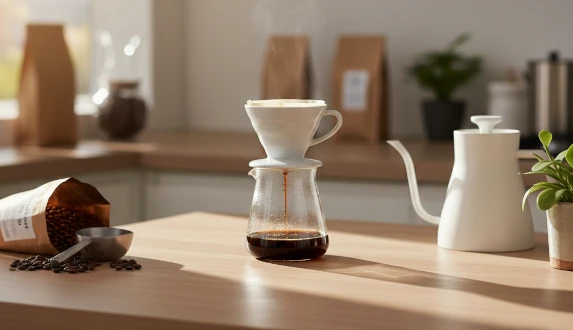
The dripper is one of the most highly regarded methods of brewing speciality coffee – simple in form, yet offering enormous control over flavour. If you are wondering what is a dripper, how this coffee dripper works, and why coffee brewed with a dripper can impress with its clarity and aroma, you are in the right place!
In this article, we comprehensively answer the most important questions about the dripper coffee maker: what it is, how to choose the right pour over coffee maker, which coffees work best for drip brewing, and how to brew coffee using a dripper to get the very best out of your beans. Whether you are just starting your pour over journey or looking to refine your technique, this guide will help you brew truly great coffee.
If you already know you want to try this method in practice, take a look at the category in our online shop – Coffee makers, where you will find classic drippers, practical servers and other accessories for brewing coffee using the pour over method.
Summary:
- Coffee dripper – what is it?
- Coffee from a dripper – which coffee works best?
- How to brew coffee using a dripper? Step-by-step guide
- The most common mistakes when brewing coffee with a dripper
- Ceramic coffee dripper – is it a good choice?
- How to brew coffee with a dripper for the best taste?
Coffee dripper – what is it?
A coffee dripper is a type of manual coffee maker – a pour over coffee maker. It allows you to brew coffee by slowly pouring hot water over ground coffee placed in a paper or metal filter. The result is a clean, aromatic cup of coffee from a dripper, in which you can clearly taste the flavour notes characteristic of a given speciality coffee.
Put simply: a dripper and coffee are a combination of control and simplicity in one brewing method. You do not need a complicated machine – all you need is a dripper coffee maker, a filter, a mug or server, good-quality coffee and hot water. This accessibility is exactly why the coffee dripper has become one of the most popular choices among baristas and home coffee enthusiasts around the world.
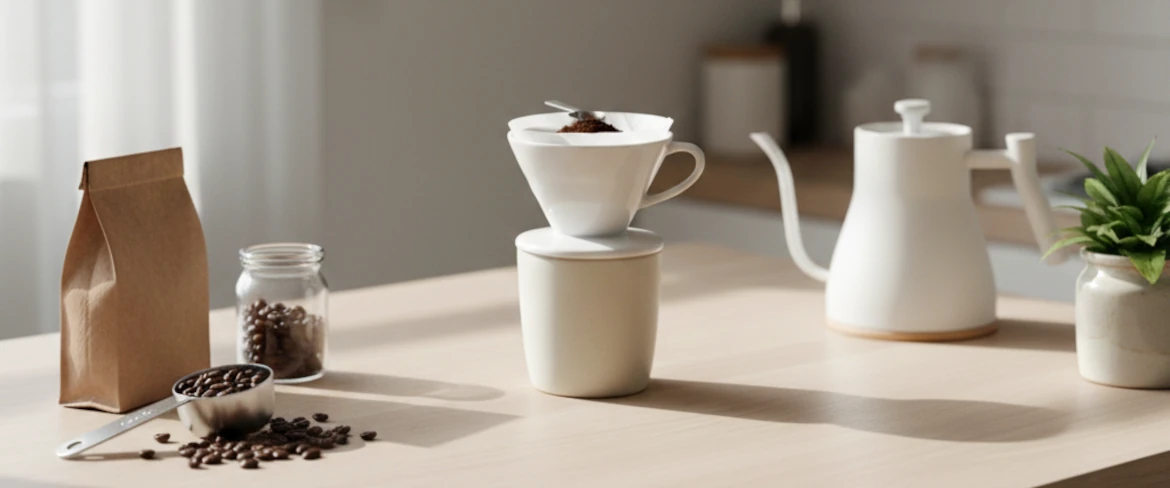
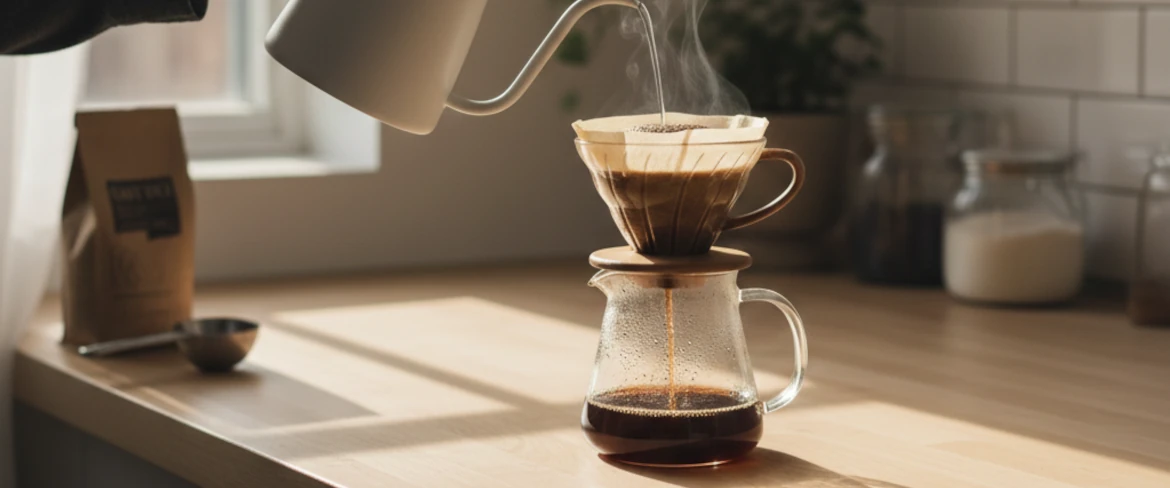
It is also worth knowing what a dripper looks like and what it consists of. Most commonly, it has the shape of a cone or funnel with one or several holes at the bottom. Inside, a filter (paper, metal or cloth) is placed and filled with ground coffee. The dripper is set directly on a mug or a server, and hot water poured over the coffee flows down by gravity into the vessel below.
📌 In short: A dripper is a simple pour over coffee maker that gives you full control over flavour, brewing time and proportions – without electronics and without rushing.
Dripper as a pour over coffee maker – how does it work?
The coffee dripper, as a simple pour over coffee maker, works in a very logical and repeatable way. Ground coffee is placed in a filter seated inside the cone-shaped body of the dripper, which is positioned directly on a mug or server. Hot water is then poured over the coffee in several stages, and the brewed coffee flows freely into the vessel below.
The key factors here are gravity and the flow rate of the water. You decide:
- how fast you pour the water – this affects the intensity of extraction,
- how much coffee for drip brewing you use – proportions are crucial for flavour balance,
- how long the brewing process lasts – too short will result in under-extracted coffee, too long in bitterness.
This level of control is exactly why coffee brewed with a dripper is so highly valued. Compared to automatic methods, the dripper helps you better understand the brewing process and consciously influence the final result in the cup.
Types of coffee drippers: ceramic, plastic, metal – a quick overview
Although the basic principle of a dripper remains the same, the material the coffee maker is made from affects brewing comfort and the overall brewing experience. On the market, you will find several main types of drippers, which differ not so much in “quality” as in intended use.
- ✔️ Plastic dripper – lightweight, durable and very stable in terms of temperature. Often recommended for beginners and for travel.
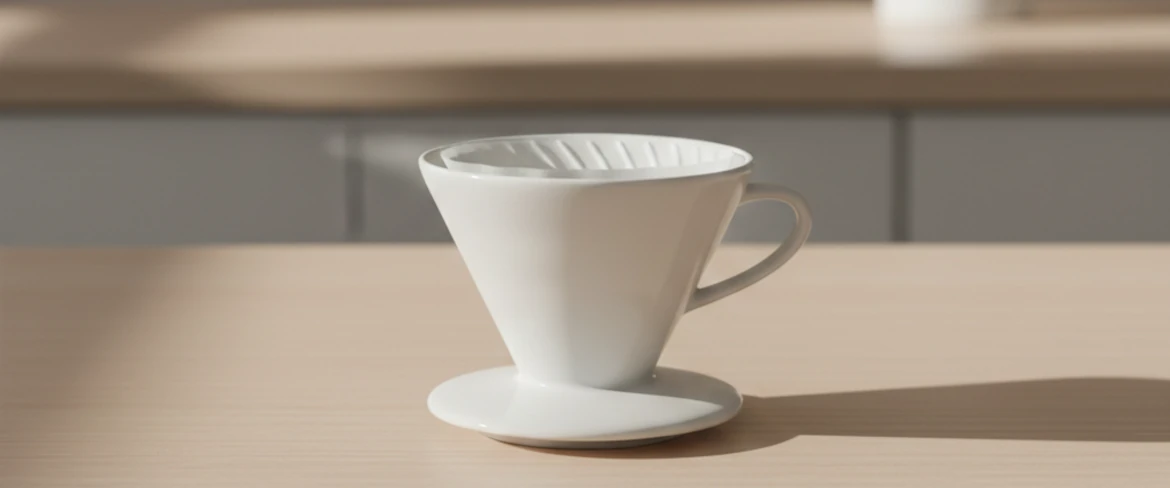
- ✔️ Ceramic coffee dripper – a classic choice for home brewing, appreciated for its aesthetics and brewing stability (when properly preheated).
- ✔️ Glass dripper – a visual compromise between design and functionality, allowing you to observe the entire pour over process.
- ✔️ Metal dripper – extremely durable, often with a reusable filter, chosen by minimalists and for outdoor use.
Each of these materials works best in different conditions and suits a different brewing style. If you want to learn how ceramic performs in practice and who it is best suited for, we will return to this topic later in the article.
Drip V60 – the most popular coffee dripper
Drip V60 is an absolute icon in the world of pour over brewing. Its characteristic cone shape, 60-degree angle and spiral ribs on the inside ensure that water flows evenly through the coffee bed, allowing for very precise extraction.
💡 Did you know? The history of the dripper dates back to 1908, when German housewife Melitta Bentz invented the first coffee maker with a paper filter, using a brass cup with holes punched in it and a sheet of her son’s exercise book. Her invention marked the beginning of pour over coffee brewing. The cone-shaped dripper appeared in the 1930s, and the modern icon of pour overs became the Hario V60, introduced to the market in 2004–2005 and recognised as a symbol of the third wave of coffee.
For many coffee lovers, coffee from a drip V60 is the benchmark in the world of speciality coffee. It is also one of the most popular choices for learning, as it clearly shows how grind size, proportions and technique influence flavour.
Coffee from a dripper – which coffee works best?
The pour over method highlights what is most distinctive in coffee beans – aroma, acidity, sweetness and subtle flavour nuances. That is why coffee from a dripper tastes best when brewed with high-quality beans that are properly roasted and freshly roasted. A dripper does not hide mistakes – it reveals them. But when paired with the right coffee, it rewards you with an exceptionally clean and complex cup.
If you want to fully unlock the potential of this brewing method, it is worth paying attention to a few key characteristics of the beans. A great starting point is speciality coffee, roasted light to medium, ideally as single origin. You will find such coffees in our shop.
How to choose coffee for drip brewing?
When choosing coffee for drip brewing, it is worth looking beyond the country name or tasting notes and focusing on a few technical aspects that have a major impact on the final cup.
- ✔️ Roast profile – light or medium roasts work best for a coffee dripper, as they preserve the natural character of the beans.
- ✔️ Freshness – freshly roasted coffee (ideally from about 2 weeks up to around 3 months after roasting) ensures better extraction and fuller aroma.
- ✔️ Intended use – coffees labelled as suitable for pour over brewing are roasted with clarity and balance in mind.
A dripper coffee maker pairs best with coffees that are not overly intense or bitter. Instead of heavy, smoky notes typical of espresso roasts, pour over brewing focuses on transparency, sweetness and pleasant acidity.
Roast level and flavour profile vs the taste of coffee from a dripper
Roast level is one of the most important factors influencing the taste of coffee from a dripper. In pour over methods, light roasts and medium roasts are the standard – they allow water to extract the best qualities from the beans.
- ☕ Light roast – highlights fruity, floral and citrus notes, offering high clarity and vibrant acidity.
- ☕ Medium roast (most Coffee Broastery coffees are roasted at a medium‑light level) – delivers more balance, sweetness and chocolate‑nut notes, while maintaining a clean cup.
- ☕ Dark roast – typically intended for espresso; when used in a dripper, it often results in flat, bitter flavours and suppresses delicate aromas.
👉 If you want to better understand the difference between acidity and bitterness in coffee and consciously choose beans that match your taste preferences, we recommend our blog article: Coffee acidity and bitterness – how to choose the perfect beans for your taste
Freshness and origin of coffee beans
In pour over brewing, freshness is absolutely crucial. Coffee from a dripper brewed with freshly roasted beans is more aromatic, sweeter and clearer in flavour. Older beans lose volatile aromas more quickly, resulting in a flat and lifeless cup.
The origin of the coffee is equally important. The best results in a coffee dripper come from single origin coffees with transparent information about region, farm and processing method. This allows you to consciously choose flavour profiles that suit your preferences.
- 🌍 Africa – high acidity, citrus, floral and berry notes.
- 🌍 Central and South America – balance, sweetness, caramel, chocolate and gentle fruit notes.
- 🌍 Brazil – low acidity, creamy body, nutty and chocolate flavours.
We particularly recommend Brazilian coffees such as Cerrado, Guaxupe or Mogiana – speciality, 100% Arabica, single origin coffees, freshly roasted at a medium‑light level, which work exceptionally well in a coffee dripper. You can find them in our shop in the category Brazilian coffee.
How to brew coffee using a dripper? Step-by-step guide
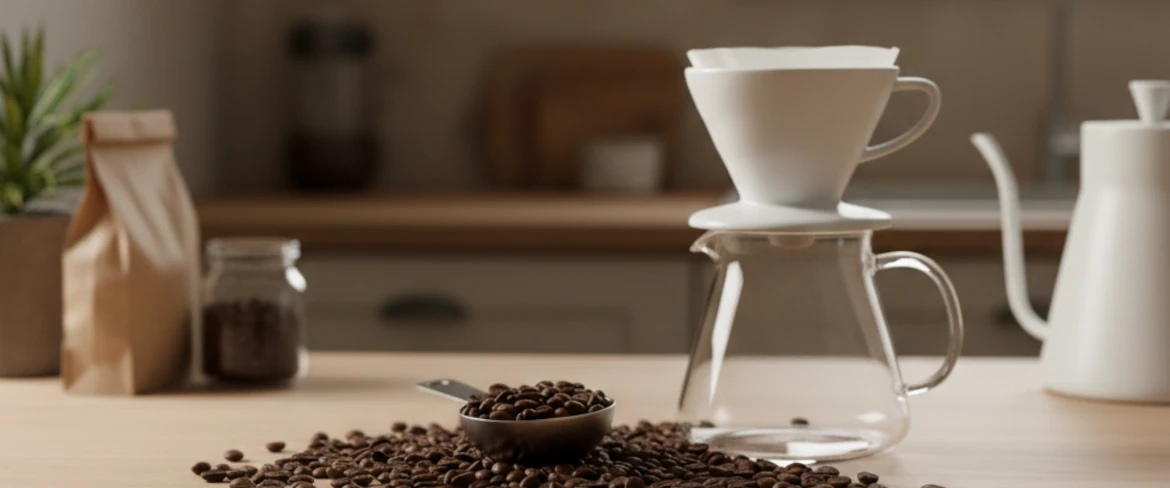
Brewing coffee with a dripper does not require complicated equipment or a barista certificate. The key is a repeatable process, correct proportions and a bit of attention. Once you understand how to brew coffee using a dripper, you can freely experiment with flavour – changing the coffee itself, grind size or pouring speed.
Below you will find a universal method that works well both with the classic drip V60 and with other pour over coffee makers.
How much coffee for drip? Basic proportions
One of the most common questions is: how much coffee for drip brewing should you use to achieve a balanced cup? In pour over methods, it is best to start with simple, proven ratios.
📌 Recommended ratio: 1:15 – 1:17, which means approx. 6–7 g of coffee per 100 ml of water
For example, if you are brewing 300 ml of coffee, use:
- ✔️ approx. 18–20 g of coffee for a fuller, more intense cup,
- ✔️ approx. 16–17 g of coffee for a lighter, more tea‑like profile.
These proportions should be treated as a starting point. A dripper coffee maker offers great flexibility – you can increase the dose for more sweetness and body, or reduce it if you prefer a lighter, cleaner cup.
Grinding and preparation for drip brewing
Just as important as proportions is proper grind size. This is what determines how quickly water flows through the coffee bed and how efficient the extraction will be.
For a coffee dripper, a medium to medium‑coarse grind works best – similar in texture to coarse salt or raw sugar. Grinding too fine will slow the flow and result in bitterness and over‑extraction, while grinding too coarse will lead to flat, under‑extracted coffee. The best results are achieved by grinding the coffee just before brewing.
Before you start brewing, it is also worth:
- rinsing the paper filter with hot water (to remove paper taste),
- preheating the dripper and the vessel the coffee will drip into,
- making sure the coffee bed in the filter is evenly levelled.
👉 If you want to explore grinding in more depth and understand how it affects flavour, be sure to read our article: Grinding coffee – why do freshly ground beans change the coffee taste?
How to brew coffee with a dripper – the pouring process
The pouring stage is where you have the greatest influence on flavour. With a pour over coffee maker, the goal is not to pour water quickly, but to use a controlled, staged pouring technique that allows even extraction. The total brewing time usually ranges from 2:30 to 4:00 minutes, depending on the dose, grind size and pouring speed.
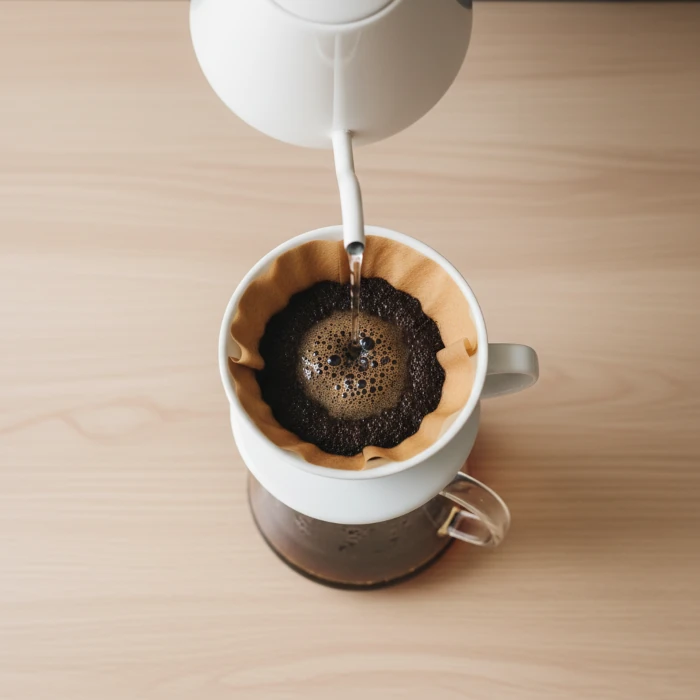
☕ Brewing coffee with a dripper – a simple step-by-step guide
Brewing coffee with a dripper is a ritual that produces a clean cup with rich aroma. The standard recipe is based on a ratio of 6 g of coffee per 100 ml of water.
Preparation:
- Grinding – start with freshly ground coffee at a medium grind, similar to coarse sand or sea salt.
- Filter and dripper – place a paper filter in the dripper and rinse it with hot water. This removes paper taste and preheats both the ceramic coffee dripper and the server. Discard the rinse water before brewing.
- Water – prepare water at a temperature of 90–96°C (just off the boil, after resting for about 30–60 seconds).
Brewing process:
- Add the coffee – place the measured ground coffee into the filter and gently level the surface.
- Blooming – pour a small amount of water (approx. 30–50 ml) over the coffee, just enough to wet it. Wait for 30 seconds. During this stage, the coffee releases carbon dioxide, which improves flavour and aroma.
- Main pour – slowly pour the remaining water in a steady, gentle stream, using circular motions from the centre outwards. You can pour in stages, for example in 100 ml intervals.
- Finish brewing – the entire process (from the first pour) should take 2:30–4:00 minutes. If the water flows too quickly, grind finer; if it flows too slowly, grind coarser.
Once brewing is complete, remove the dripper, gently swirl the coffee in the server and pour into your favourite cup.
At the beginning, it is best to stick to one proven recipe and change only one parameter at a time – such as grind size or dose. This makes it much easier to understand what exactly influences the taste of coffee from a dripper and helps you reach your ideal cup faster.
Even with good coffee and correct technique, things can sometimes go wrong – the coffee may taste too sour, bitter or flat. In the next section, we will look at the most common mistakes when brewing coffee with a dripper and how to avoid them.
The most common mistakes when brewing coffee with a dripper
A dripper coffee maker offers enormous control over the brewing process, but at the same time it mercilessly exposes even small mistakes. If coffee from a dripper tastes too sour, too bitter or simply “flat”, the cause is usually not the coffee itself, but one of the basic brewing parameters.
Below, we have collected the most common mistakes when brewing coffee with a dripper, along with simple tips on how to avoid them and quickly improve the taste of your cup.
Grinding the coffee too fine or too coarse
Incorrect grind size is one of the most frequent issues faced by people brewing with a coffee dripper. Grind size directly affects water flow and the level of extraction.
- ❌ Grinding too fine – water flows very slowly, and the coffee tastes heavy, bitter and astringent. This often leads to over‑extraction.
- ❌ Grinding too coarse – water passes through the coffee too quickly, resulting in a weak, flat and noticeably sour cup.
If your brewing time differs significantly from the recommended range (approx. 2:30–4:00 minutes), it is almost always a sign that the grind size needs adjustment. With a dripper coffee maker, even a small change in grind can dramatically alter the flavour.
Incorrect water temperature
Water temperature is another factor that is often overlooked, yet it has a huge impact on the taste of coffee from a dripper. Both water that is too cool and water that is too hot will disrupt extraction balance.
- ❌ Water that is too cool (below 88–90°C) – coffee tends to taste sour, under‑extracted and lacking sweetness.
- ❌ Water that is too hot (above 96–97°C) – the brew may become bitter, harsh and over‑extracted.
For most pour over coffees, the optimal temperature range is 90–96°C. In practice, this means water that has just come off the boil and rested briefly. Especially with light‑roasted speciality coffees, the right temperature helps bring out sweetness and complexity without aggressive bitterness.
Problems with flow and extraction during brewing
Even with good coffee, correct grind size and proper water temperature, flavour can suffer due to uneven water flow. When brewing with a dripper, it is crucial how water interacts with the entire coffee bed.
The most common issues include:
- ❌ Channelling – water finds the easiest path through the coffee, bypassing part of the bed. This leads to uneven extraction and an unbalanced flavour.
- ❌ Excessively fast flow – often caused by unevenly distributed coffee or a grind that is too coarse. The resulting coffee is weak and hollow.
- ❌ Excessively slow flow – usually the result of grinding too fine or pouring too aggressively, which can lead to bitterness.
To prevent these problems, it is worth:
- ✅ levelling the coffee bed in the filter before brewing,
- ✅ pouring water in a calm, steady stream,
- ✅ avoiding pouring directly onto the sides of the filter.
A coffee dripper rewards precision – the more even the flow and the calmer the process, the cleaner and more balanced the flavour in the cup.
Ceramic coffee dripper – is it a good choice?
If you have reached this point, you already know how a dripper works and how to brew good coffee with it. The next natural question is: which dripper should you choose for everyday use? One of the most commonly recommended options – especially for home coffee lovers – is the ceramic coffee dripper.
Ceramic is often described as a “classic” material, but its popularity is not based on appearance alone. It is a choice that has a real impact on brewing stability, flavour consistency and overall comfort – provided you know how to use it properly.
Advantages of stable temperature
One of the biggest advantages offered by a ceramic coffee maker is its high thermal mass. This means that a properly preheated ceramic coffee dripper can maintain a stable temperature throughout the entire brewing process.
Why does this matter? In pour over brewing, even small temperature fluctuations can lead to uneven extraction. Ceramic:
- ✔️ stabilises water temperature when it comes into contact with the coffee,
- ✔️ reduces the risk of under‑extraction at the beginning of the brew,
- ✔️ supports a repeatable, predictable flavour profile.
The result in the cup is usually more balanced coffee from a dripper, with clearer sweetness and a cleaner profile. It is worth remembering, however, that ceramic requires thorough preheating – without it, its advantages can quickly turn into drawbacks.
💡 Tip: Before brewing, always rinse your ceramic coffee dripper with boiling water – together with the filter and server. This is essential for making the most of its potential.
Comparison with drippers made from other materials
To make it easier to decide whether a ceramic coffee dripper is the right choice for you, it is worth comparing it with other popular materials – not in terms of “what they are”, but how they perform in daily use and what kind of results they deliver.
| Material | Best suited for | Brewing character |
|---|---|---|
| Ceramic | Those who value ritual and consistency | Stable extraction, balanced flavour |
| Plastic | Beginners and travellers | Excellent temperature control, lightweight |
| Metal | Minimalists and outdoor use | Fast flow, more pronounced body |
A ceramic coffee dripper is best suited to people who brew coffee regularly at home, enjoy a calm brewing ritual and want as much control over flavour as possible. If portability is your priority, plastic may be a better choice. If durability matters most, metal could be the right option.
There is no single “best” material. There is only the one that best matches your personal brewing style.
How to brew coffee with a dripper for the best taste?
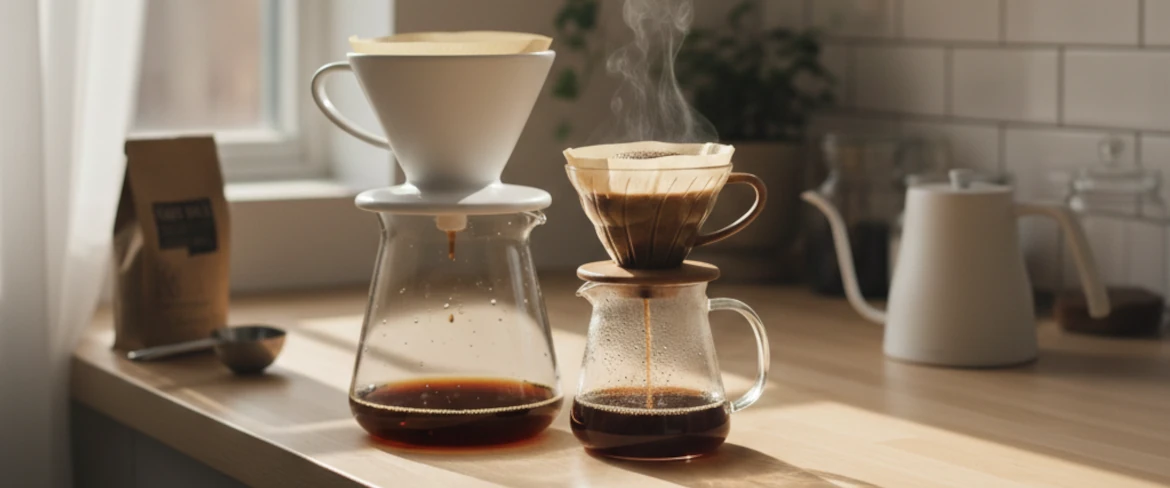
Great coffee from a dripper is the result of a few simple but consistently applied principles. The most important factors are the quality and freshness of the beans, an appropriate roast level, correct coffee-to-water ratios, and control over grind size and brewing time. A dripper coffee maker offers tremendous flexibility – whether you brew directly into a mug or choose a dripper coffee maker with a server, which allows you to prepare a larger batch and control serving more precisely.
If something does not taste quite right, a small adjustment is usually enough – grind size, water temperature or pouring speed. This ability to consciously experiment is what makes brewing coffee with a dripper quickly become a daily ritual rather than just a technique.
👉 If you are also interested in other classic coffee brewing methods and want to broaden your coffee horizons, be sure to read our article: How to make coffee in a moka pot? A practical guide to help you brew the perfect stovetop coffee!
The most important thing? Take your time, brew mindfully and enjoy experimenting – because the best coffee from a dripper is the one that tastes best to you.
A good dripper is only the beginning – the rest happens in your cup.
FAQ – frequently asked questions about coffee drippers
1. What is a dripper and how does it work?
A coffee dripper is a manual pour over coffee maker in which coffee is brewed by slowly pouring hot water over ground coffee placed in a filter. The water flows through the coffee under gravity and drips into a mug or server, producing a clean and aromatic cup. A dripper gives you a high level of control over flavour – from proportions and grind size to pouring speed.
2. Which coffee works best for drip brewing?
For brewing with a dripper coffee maker, speciality coffees work best, roasted light to medium, ideally as single origin. Pour over brewing highlights natural sweetness, acidity and complex aromas. Many people start with coffees from Brazil, Colombia or Africa, depending on their preferred flavour profile.
3. How coarse should coffee be ground for a dripper?
Coffee for a dripper should be ground medium to medium‑coarse, with a texture similar to coarse salt or raw sugar. Grinding too fine slows the flow and leads to bitterness, while grinding too coarse results in weak and under‑extracted coffee.
4. How long should drip coffee brewing take?
The standard brewing time for coffee from a dripper is around 2:30–4:00 minutes. Shorter times usually mean under‑extraction, while longer times often result in bitterness. Brewing time is a useful indicator for adjusting grind size and pouring speed.
5. How much coffee for drip brewing?
The most commonly used ratio is 1:15–1:17, which means around 6–7 g of coffee per 100 ml of water. For example, for a 300 ml brew, most people use 18–20 g of coffee. You can slightly adjust the ratio to suit your personal taste preferences.
Recommended

Chemex‑style coffee maker 800 ml + reusable filter
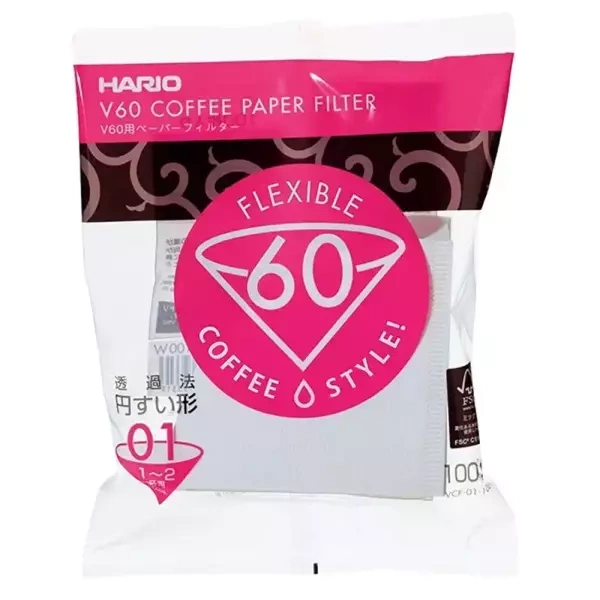
Paper filters for Hario V60-01 dripper (100 pieces)

Coffee Broastery - whole bean coffee Brazil Mogiana Premium 1kg
