Chemex coffee maker – what is a chemex and how chemex works?
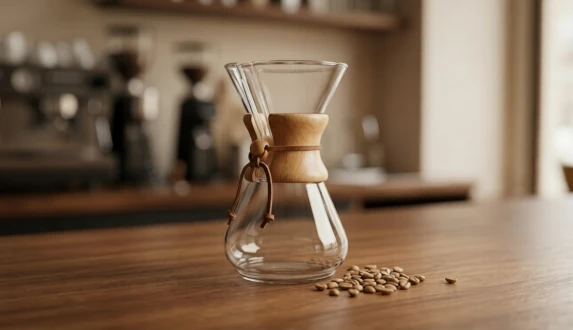
If the speciality coffee world had its design icon, it would undoubtedly be this characteristic, elegant hourglass-like flask. However, a chemex is much more than just a beautiful decoration for a kitchen worktop – it is, above all, a brewing method that allows you to extract the purest and most intriguing notes from the coffee beans. Wondering: what is a chemex, who is it best suited for, and how to start your barista adventure with it?
In this article, we will take a closer look at this extraordinary device. You will find out how chemex works, why baristas all over the world reach for this chemex coffee maker so eagerly, and how it affects the final flavour of the brew. If you are looking for a way to prepare a large amount of excellent, clear coffee at home, you are in the perfect place.
And if you want to try this method in practice right away, in our shop you will find a high-quality chemex coffee pot with a convenient reusable filter – it is a great choice for both beginners and advanced lovers of the black beverage.
Summary:
- Chemex – what exactly is it and where does its popularity come from?
- How chemex works and why does it produce such clean coffee?
- Chemex vs drip – what is the difference between a chemex brewer and a dripper?
- How to brew with chemex?
- Which chemex coffee will work best?
- Chemex coffee maker – how to choose the right model?
Chemex – what exactly is it and where does its popularity come from?
In the world of alternative brewing methods, the chemex brewer holds a special place. Defining it simply: it is a vessel used for pour-over coffee brewing that combines the function of a funnel with a jug for the ready brew. Although for many decades it was known mainly in narrow circles of enthusiasts, its true renaissance came with the so-called third wave of coffee.
Why did speciality coffee lovers fall in love with it? Above all, because of the uncompromising quality of extraction. Chemex coffee is a synonym for a brew that is incredibly clean, devoid of bitterness, and full of subtle, complex flavour notes – from fruity to floral. Unlike immersion methods (such as a French Press), where the grounds have long contact with water, here the water freely flows through the ground beans, taking the very best with it. Additionally, its capacity allows you to prepare even several cups at once, which makes it an ideal choice for meetings with friends or unhurried Sunday mornings.
Chemex as a glass coffee maker
What immediately catches the eye is the unique construction of this device. The glass coffee maker in its classic form somewhat resembles laboratory equipment – and this is no coincidence! This vessel is made of high-quality, heat-resistant borosilicate glass. The choice of this material is crucial for the flavour – glass is completely chemically inert, which means it does not absorb any aromas from previous brews and does not impart its own aftertaste to the infusion.
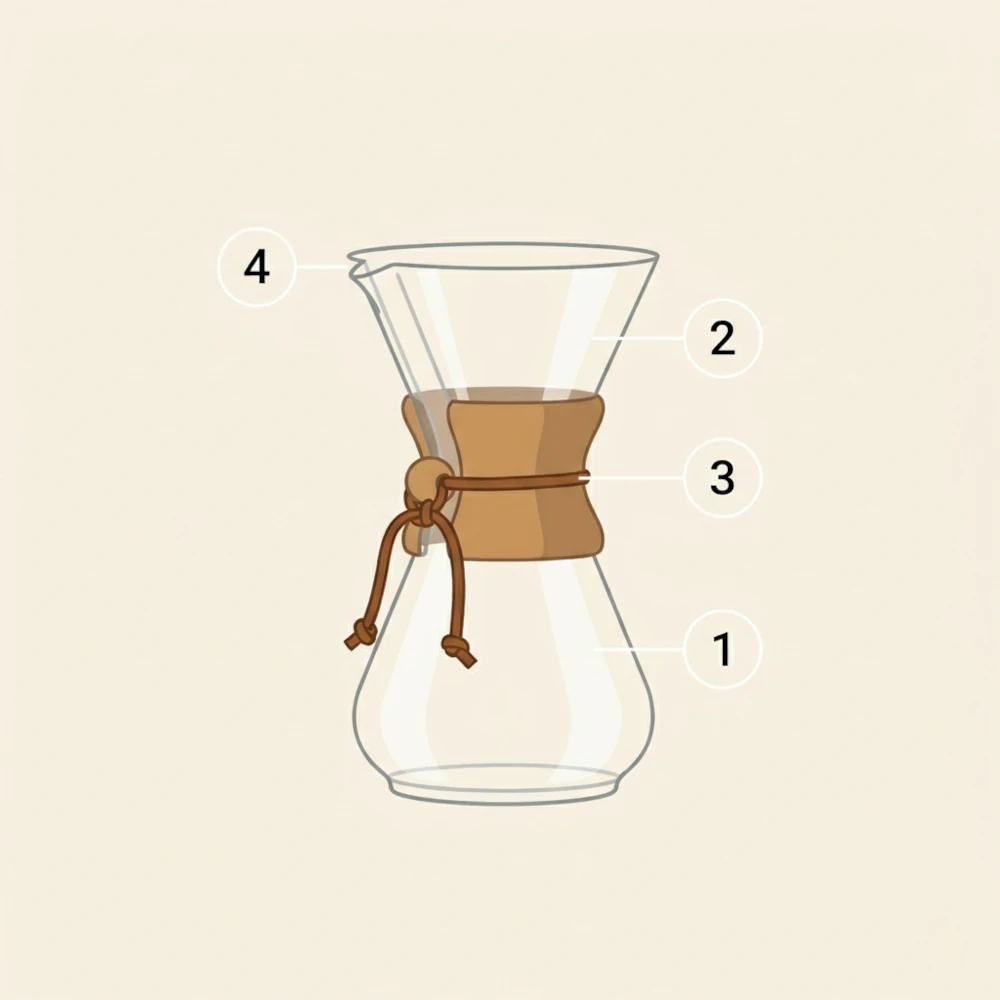
⏳ Characteristic elements of a chemex:
- Single-body construction – combines a funnel (the upper part for filters) with a decanter (the lower part for the brew).
- Borosilicate glass – guarantees ideal hygiene and resistance to high temperatures.
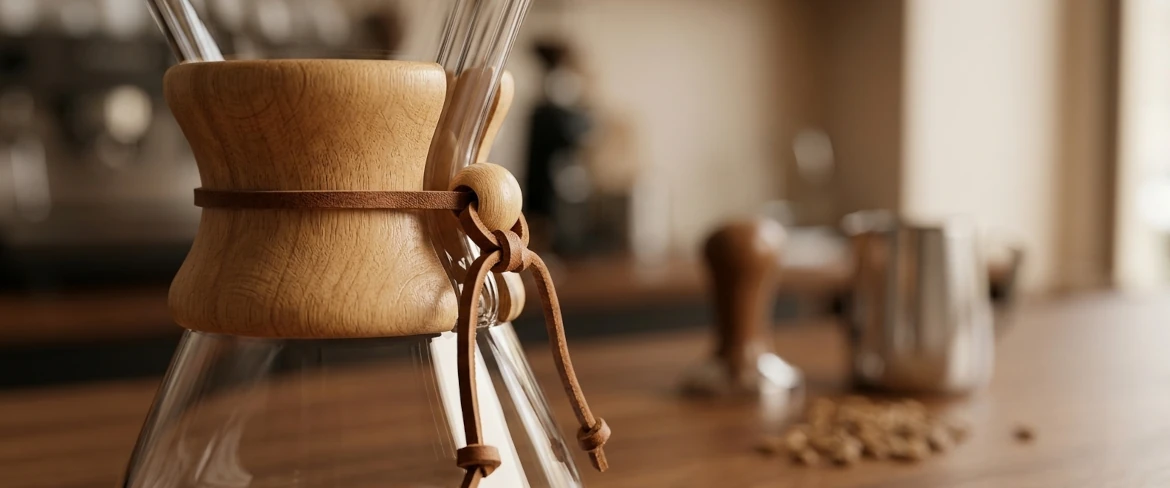
- Wooden collar with a tie – protects hands from burning and gives the vessel an elegant, timeless look. It is worth noting that versions with a glass handle are also available.
- Air channel – a spout in the funnel not only makes pouring the ready coffee into cups easier but also allows hot air to escape during brewing, preventing the extraction process from stalling.
Thanks to such a design, the chemex coffee maker not only looks perfect but also perfectly controls the brewing process. The angle of the funnel walls is designed so that water flows through the ground coffee at an optimal pace.
The Chemex brewer in the history of coffee brewing methods
Although it might seem that such minimalist and functional design is an invention of recent years, the history of the Chemex dates back to the Second World War. The device was invented in 1941 by a German chemist residing in the United States – Dr Peter Schlumbohm.
💡 Good to know: Dr Schlumbohm had over 300 patents to his name, but it was the Chemex that brought him the greatest fame. As a chemist, he perfectly understood extraction processes and knew how important the choice of flavour-neutral materials was. He based his design on the shape of a laboratory Erlenmeyer flask and a glass funnel, combining them into one coherent and elegant whole.
The design of the brewer turned out to be so perfect that it has remained almost unchanged since its creation. What is more, its exceptional aesthetics and impact on utilitarian culture have been recognised by artistic circles. The Chemex is part of the permanent exhibition at the Museum of Modern Art in New York as one of the best-designed everyday objects in history. Today, alongside methods such as the drip or Aeropress, it forms an absolute foundation in the world of coffee professionals and home enthusiasts looking for the highest quality in a cup.
How chemex works and why does it produce such clean coffee?
How chemex works? To understand this, you do not need an engineering degree, although all the magic relies on precise physics and the laws of gravity. It is a classic representative of pour-over methods. The basic principle is simple: appropriately ground coffee lands in a filter placed in the upper part of the vessel, and then it is poured over with hot water. The water steadily flows through the bean particles, extracting (i.e., washing out) valuable flavour and aromatic substances from them. Under the influence of gravity, the ready brew drips straight into the glass decanter at the bottom.
Why, then, is coffee from a chemex considered one of the cleanest in the world? The secret lies in the perfect harmony between the shape of the vessel – the narrower neck regulates the water flow rate – and the filter, which acts as a ruthless barrier for anything that could muddy the brew.
Chemex filters and the flavour of coffee
It is they who are the silent heroes of the whole ritual. Classic, paper chemex filters are about 20-30% thicker than the standard ones used in drippers. Such paper density ensures that they retain almost all coffee oils and the finest dust created during the grinding of the beans. The result in the cup is truly astonishing – the brew gains a tea-like clarity, is free of sediment and heavy bitterness. Instead, crisp, fruity acidity and delicate, floral notes, characteristic of lightly roasted beans, come to the forefront.
💡 Good to know: Remember that in our shop you will find a chemex style brewer equipped with a reusable stainless steel filter. It is a great, eco-friendly alternative to paper! The metal mesh traps the grounds but allows a bit of natural coffee oils to get into the brew. Thanks to this, the coffee retains its incredible cleanliness but gains a slightly fuller, pleasantly round body.
Chemex vs other brewers – what is the difference in coffee extraction?
The world of coffee is an endless field for experimentation, and each device extracts completely different properties from the same beans. In chemex coffee brewing, water constantly washes over the coffee particles and falls downwards – this phenomenon is called continuous extraction. It works completely differently in immersion or pressurised methods. Let's look at a brief comparison:
| Brewing method | Extraction type | Brew characteristics |
|---|---|---|
| Chemex | Pour-over | Light, tea-like, incredibly clean, strongly accentuates the fruity and floral notes of the beans. |
| French Press | Immersion | Thick, oily, with a heavier body and fine sediment at the bottom. Accentuates chocolate and nutty notes. |
| Moka pot | Pressurised | Very intense, thick, similar in flavour to a classic espresso. |
While a chemex is a synonym for delicacy, a moka pot is a one-way ticket to a thick, Italian style. If you fancy a stronger, chocolatey hit of flavour, make sure to check out our blog post: How to make coffee in a moka pot? A practical guide to help you brew the perfect stovetop coffee!
There is another aspect that many beginner coffee drinkers do not know. Although coffee from a chemex tastes incredibly light, it can give a really solid kick! This is due to the longer contact time of water with the ground beans, which favours the release of a large amount of caffeine. Surprised that a delicate pour-over can wake you up more strongly than a shot of espresso? If you want to explore this topic, we recommend our article: How much caffeine is in coffee? Find out how much caffeine is in espresso, latte and other types of coffee.
Chemex vs drip – what is the difference between a chemex brewer and a dripper?
We often encounter the question: since both methods rely on pouring water over ground beans, in the comparison of chemex vs drip – what should you ultimately choose and is there any difference between them? Although at first glance a chemex style brewer and a classic dripper (such as the popular V60) seem to operate on a very similar principle, in reality, they offer slightly different experiences both in the brewing itself and the final flavour in the cup.
Let's start with the construction, convenience, and application. A dripper is usually just a small funnel (made of ceramics, plastic, glass, or metal) that we place directly on our favourite mug or a dedicated, separate server. It is extremely compact, damage-resistant, and makes a perfect choice when you want to quickly prepare a single portion of coffee. It works great for travel.
In turn, a chemex coffee maker is a single-piece, entirely glass device – it combines a funnel and a carafe. It is a beautiful, stationary kitchen decoration. Due to its shape and larger capacity, it is an irreplaceable choice when you want to brew excellent coffee for a larger group of people or for a longer afternoon with a book.
The key difference, however, lies in the thickness of the filters used, and consequently – in the flavour. In the case of a drip, we use thinner paper, which makes the water flow through the beans a bit faster, taking more natural oils into the brew. Coffee from a dripper is characterised by a slightly heavier body, more pronounced acidity, and high intensity. If you are interested in this method and want to explore the secrets of its preparation, be sure to check out our other post: Coffee dripper – how to brew coffee using a dripper to get maximum flavour?
Let us return, however, to the hero of our article. In a chemex, thick filters mean that extraction is slightly longer, and all oils and sediments are ruthlessly retained. The result is an extremely clean, subtle brew, resembling fine tea in its structure.
📌 Summary – chemex or drip?
- ✔️ Flavour: a chemex produces an extremely clean, delicate, and tea-like brew; a drip offers a slightly fuller body and more distinct, fruity acidity.
- ✔️ Filters: in a chemex we use very thick paper (or dense metal filters), in a drip – much thinner paper.
- ✔️ Convenience: a drip is mobile and ideal for one cup; a chemex is an elegant home vessel, perfect for brewing larger amounts of infusion for family and guests.

How to brew with chemex?
It is time to move from theory to practice! Wondering how to prepare a brew to fully utilise the potential of the beans and impress your guests (or yourself)? Although at first the whole process may seem a bit complicated and resemble an alchemical ritual, in reality, it is a very simple and satisfying activity. To start, you will need a few basic elements. The base, of course, is the brewer itself and a suitable filter (classic paper or eco-friendly reusable – available in a set with a chemex style brewer in our shop). You will also need a kitchen scale, a timer, a kettle (preferably one with a special, thin gooseneck spout, facilitating precise water pouring), and – most importantly – good water and excellent quality speciality coffee.
Chemex – how to brew coffee?
Proper coffee brewing in this vessel turns a morning routine into a relaxing ritual. Before the water touches the beans, remember one absolutely crucial step if you are using paper filters: you must always rinse them generously with hot water first. Why? This allows you to get rid of the unpleasant papery aftertaste and at the same time perfectly preheats the glass vessel itself. If you are using our reusable steel filter, simply rinse it with warm water to equalise the temperature of the glass and metal.
Once the equipment is properly prepared and warmed up, pour out the water from the lower part of the decanter, pour freshly ground coffee into the filter, and gently shake the brewer to level its surface. This is where the real magic begins. Let's see step by step how to brew with chemex, so you achieve an outstanding brew every single time.

☕ The process of brewing coffee in a chemex in 3 steps
- Pre-infusion (blooming): start the timer and pour a small amount of hot water over the coffee (its weight should be approximately twice the weight of the coffee). Wait 30 to 45 seconds. You will see the coffee rise, 'swell', and release gas bubbles. This step opens up the ground coffee particles and releases their full flavour!
- Proper pouring: after pre-infusion, begin to slowly add the rest of the water. Do this with calm, circular motions, starting from the centre and moving towards the edges. You can pour all the water in a slow, continuous stream or divide this process into 2-3 smaller batches.
- Extraction: once you have poured the desired amount of water, simply let it flow freely through the coffee grounds. The total brewing time should be around 3.5 to 4.5 minutes. Finally, remove the filter and give the ready brew a swirl.
And that is it! Your exceptional brew is ready. Pour it into your favourite mug or cup and enjoy the incredibly clean, complex flavour profile. With every subsequent brew, this process will become more and more natural to you.
How much coffee for a chemex and how much water to use?
One of the most frequently asked questions by beginner coffee enthusiasts is: how much coffee for a chemex and water will be optimal so the brew is neither too weak nor too strong? In the world of speciality coffee, we rely on the so-called brew ratio, which is the proportion of the beans' weight to the amount of water.
For pour-over methods, the widely accepted 'golden standard' is a ratio ranging from 1:15 to 1:17. This means that for every 1 gram of coffee, there are 15 to 17 grams (millilitres) of water. A 1:15 ratio will give us a slightly more intense and stronger-tasting brew, while 1:17 will result in a very delicate and refreshing coffee.
⚖️ Example proportions (1:15 ratio):
- ✔️ One large portion (approx. 300 ml of water): you need 20 grams of coffee.
- ✔️ Two portions (approx. 500 ml of water): you need approx. 33 grams of coffee.
- ✔️ Coffee for a larger number of people (approx. 750 ml of water): you need 50 grams of coffee.
Chemex coffee brewing – most common mistakes
Even the best baristas stumble sometimes, and chemex coffee brewing at home is an art that requires a bit of practice. What should you keep in mind and what pitfalls should you avoid so as not to ruin your morning cup?
- ❌ Grinding too fine or too coarse. If the water stands in the filter and refuses to flow through, and the brewing time significantly exceeds 5-6 minutes, the beans are ground too finely (the brew will be bitter and 'over-extracted'). If the water flies through instantly (under 3 minutes), the coffee is ground too coarsely (the brew will turn out watery, tart, and sour).
- ❌ Wrong water temperature. Pouring boiling water straight from a boiling kettle over the beans is a crime against their flavour! The optimal temperature for pour-overs is between 90°C and 94°C. Boiling water will burn the coffee, extracting an unpleasant bitterness from it. If you do not have a thermometer, simply wait about 1-2 minutes after the water boils before you start pouring it over the beans.
- ❌ Pouring water down the filter walls. Focus on pouring over the coffee bed itself. A stream directed straight at the paper (or steel) filter will cause the water to bypass the ground particles and flow down the walls of the decanter straight to the bottom. This leads to very uneven extraction and, as a result, a flat, bland flavour.

Which coffee for a chemex will work best?
Even the most perfect brewing technique and the most expensive equipment will not help if the wrong beans end up in the filter. So, the best coffee for a chemex – what is it exactly? Choosing the right beans is the absolute key to success, because this pour-over method, like few others, can expose any flaws in the coffee, but also ruthlessly accentuate its greatest advantages.
The golden rule of baristas is: for pour-over methods we choose light or medium-light roasted beans. Why is this so important? A darker roast – characteristic of espresso or a traditional moka pot – dominates the flavour with heavy smoky notes, dark chocolate, and nuts. In a delicate pour-over, such coffee will come out simply flat and dominated by bitterness. On the other hand, a light and medium-light roast preserves the natural, crisp character of the bean, simultaneously allowing it to develop a pleasant, fruity sweetness. It is in such coffees that incredible aromas of citrus, berries, peaches, jasmine, or bergamot hide, which the chemex can bring to the forefront in the form of a clean, tea-like brew.
If you want to learn more about where these fascinating aromas come from and how to recognise them in a cup, be sure to read our article: The flavours of coffee – a guide to flavour notes and sensory profiles.
Coffee for a chemex – grind size and flavour profile
Typing the phrase 'coffee for a chemex' into a search engine, you will most likely come across recommendations for beans from regions famous for high acidity and fruity crispness. The flavour profile, however, is only half the equation. Equally important is the correct grind size. Due to the use of thick paper filters and the specific funnel-like shape of the vessel, the beans should be ground medium-coarse or coarse. Their structure after grinding should resemble sea salt crystals or coarse sand.
Grinding too finely will completely clog the filter – water will not be able to flow freely, and the extraction will take ages, yielding an over-extracted, tart brew. Conversely, grinding too coarsely will cause water to fly through the beans in the blink of an eye, failing to wash the flavour out of them in time. We will then get 'coffee-flavoured water'.
🌍 Which beans to choose for a start?
- ✔️ Africa (Kenya, Uganda): these are absolute classics for a chemex. They will give you a brew with a highly tea-like profile, incredibly crisp, full of citrus notes, forest fruits, bergamot, and wild flowers.
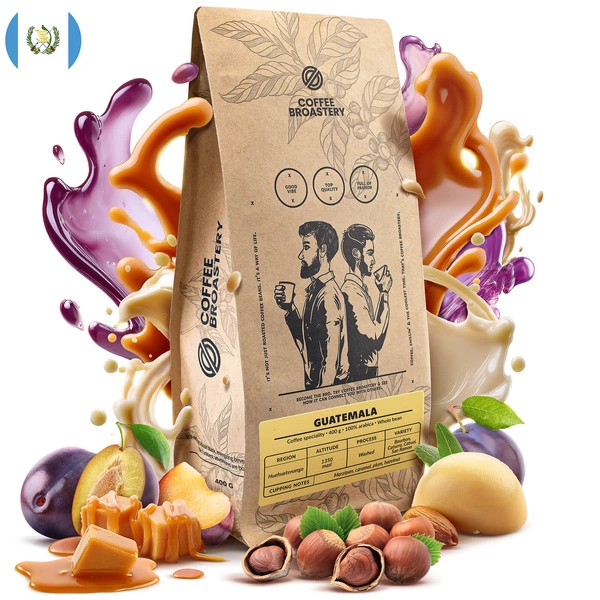
- ✔️ Central and South America (Colombia, Costa Rica, Guatemala, Nicaragua, Brazil, Cuba): a great choice if you prefer a bit more natural, fruity sweetness and calmer notes, such as peach, plum, sweet caramel, strawberries, or a chocolatey finish.
- ✔️ Asia (India): an excellent proposition for those seeking lower acidity, a round body, and intriguing, slightly spicy and chocolate-nutty accents.
Also remember the iron rule for anyone who wants to drink excellent coffee at home – we grind the beans just before brewing! This is the only way to preserve all the valuable essential oils and volatile aromas that the chemex highlights so wonderfully. Check out why this is so important (and why it is worth investing in a good grinder) in our post: Grinding coffee – why do freshly ground beans change the coffee taste?

Chemex coffee maker – how to choose the right model?
The decision to start an adventure with pour-overs is a step towards perfect coffee, but what exactly should you pay attention to so that the equipment lasts for years? The key aspect is, above all, capacity. Various variants are available on the market – from tiny 3-cup versions to large 10-portion carafes. The golden mean for most home baristas turns out to be a capacity of around 800 ml. Such a chemex coffee maker allows you to easily prepare a large mug of brew just for yourself, as well as brew excellent coffee for two or unexpected guests.
Another important issue is the type of filters and the overall build quality of the vessel. Ensure that the brewer is made of durable, heat-resistant borosilicate glass, which is chemically inert and will not change the sensory profile of your beans. A classic wooden collar tied with a leather tie is not only a timeless, elegant detail that fits into any kitchen decor, but also practical protection for your hands against burns. When buying, it is also worth thinking about the filtering system right away. Although thick paper is an absolute classic, eco-friendly reusable stainless steel filters are becoming increasingly popular. Not only do you care for the environment and save money on regularly buying paper inserts, but you also get coffee with a slightly fuller, very pleasant body.
Brewing in a chemex is more than just preparing a morning caffeine boost – it is a moment of relaxation, a celebration of details, and a fascinating, aromatic ritual. Regardless of whether you are just entering the world of speciality coffee or you are already an experienced lover of alternative methods, this elegant vessel will certainly elevate your coffee experiences to a completely new level. Since you already know everything about grind size, correct proportions, and bean selection, there is only one thing left to do: take the kettle in your hand and feel this magic in your own home!
Ready for the cleanest coffee of your life? Choose the right equipment, pour water over your favourite beans, and start your new morning ritual!
FAQ – frequently asked questions about the chemex coffee maker
1. What is a chemex?
A chemex is an elegant, glass coffee maker in the shape of an hourglass, used for preparing a brew using the pour-over method. It combines the function of a filter funnel and a decanter for the ready coffee. Thanks to its construction and the use of appropriate filters, it allows you to obtain an incredibly clean, clear brew with a delicate, tea-like flavour profile, free from sediments and heavy bitterness.
2. How much coffee for a chemex – what are the proportions?
For pour-over methods, the widely used 'brew ratio' is between 1:15 and 1:17. This means that for every 1 gram of ground coffee, there are 15 to 17 ml of hot water. If you want to prepare a large mug of coffee (approx. 300 ml of water), it is best to use 20 grams of beans. To brew 500 ml of water, use about 33 grams of coffee.
3. What coffee grind size will be suitable for a chemex?
Coffee for a chemex should be ground medium-coarse or coarse. Its particles should resemble sea salt crystals or coarse sand. Grinding too finely will clog the filter and prevent the water from flowing freely (which will result in an over-extracted, tart brew), while grinding too coarsely will cause the water to fly through the beans too quickly, giving a weak, watery effect.
4. Which chemex filters should I choose?
Traditionally, very thick paper filters are used in this method (they are 20-30% thicker than those for a drip), which trap sediments and coffee oils. An excellent, eco-friendly alternative that yields great results are reusable stainless steel filters. The metal mesh allows slightly more natural oils through, which gives the coffee a delicately fuller body.
5. How to brew with chemex?
First, rinse the filter with hot water (to get rid of the papery aftertaste and warm the glass), and then pour the water out from the bottom part. Pour in the coffee and perform pre-infusion (blooming) – pour a small amount of water over the beans and wait 30-45 seconds. Then, using slow, circular motions, pour in the rest of the water, making sure you pour over the coffee bed and not down the filter walls. The whole process should take between 3.5 and 4.5 minutes.
Recommended

Chemex‑style coffee maker 800 ml + reusable filter

Coffee Broastery - Whole Bean Coffee Brazil Cerrado Premium 1kg

Coffee Broastery - whole bean coffee Brazil Mogiana Premium 1kg